 How-to
How to Wash Organic Cotton Shirts Properly
Quick Summary
To keep organic cotton shirts looking new, wash them cold or cool on a gentle cycle, inside out, with a mild bleach-free detergent. Check the care label first, treat stains before washing, and air dry flat or on a padded hanger rather than using a hot tumble dryer.
- Hot water relaxes fibres, which can lead to shrinkage, so cool water is generally the safer choice.
- Never use chlorine bleach on organic cotton, because it weakens the fibre and can yellow the fabric.
- Dryer heat is the most common cause of cracked prints, so air dry whenever you can.
- Never wring a wet shirt; press the water out gently or roll it in a towel instead.
Table of Contents
- Why Organic Cotton Shirts Need Gentler Care
- Check the Care Label Before You Wash
- Best Temperature to Wash Cotton Shirts
- How to Remove Stains From Cotton Shirts Before Washing
- How to Wash Graphic Tees Without Cracking
- How to Dry Cotton Shirts Without Shrinking
- Your Routine for Keeping Organic Cotton Shirts Looking New
- Frequently Asked Questions
Last Updated: November 11, 2026
Most people wash their favourite organic cotton shirt the same way they wash everything else, then wonder why it shrinks, fades or looks tired after a few months. The fix is usually simple. A bit of care on the label, the right water temperature and a gentler drying routine make a real difference to how long a shirt keeps its shape and print. This guide from Baaaad Flockers walks through the best laundry practices for organic cotton shirts, step by step.
Organic cotton is often valued for its softness and breathability, and those qualities can be lost quickly through rough handling. Our article explains why organic cotton may suit sensitive skin and why it benefits from gentler care. Heat, harsh detergent and tumble drying are the usual culprits. According to the American Cleaning Institute's National Laundry Day survey, 2026, 54% of people who wash clothes at home pre-sort their laundry, and 48% treat stains before washing. Those habits matter, and they are part of the routine below.
Why Organic Cotton Shirts Need Gentler Care
Organic cotton fibres are often valued for their softness and natural feel, and they respond badly to aggressive washing. Read what makes organic cotton T-shirts better for more context on these qualities. Hot water and fast spin cycles can loosen fibres and make a shirt feel thinner over time.
- Hot water relaxes fibres, which can lead to shrinkage
- Strong agitation rubs fibres and speeds up pilling
- Heavy detergent can leave residue that dulls colour
Think of a good wash as gentle, cool and steady.
Check the Care Label Before You Wash
The care label is the first thing to read. It tells you the maker's recommended temperature, cycle and drying method. Follow it, even when a shirt feels sturdy.
Some shirts carry a mix of fibres, such as a cotton and polyester blend, or extra embellishment like embroidery. Those may need a different approach from pure cotton. If the label is missing or unclear, wash on the coolest gentle setting and dry flat.
Watch out: Ignoring the label and washing a printed shirt on a hot cycle is the fastest way to shrink it and damage the design.
Best Temperature to Wash Cotton Shirts
Cold or cool water is generally the safer choice for most cotton shirts, and it helps keep colours brighter for longer. Hotter water is only worth using when a stain truly needs it, and even then, check the label first.
How to Remove Stains From Cotton Shirts Before Washing
Treat stains as soon as you spot them, because organic cotton is absorbent and a mark that sits for a day can wick deeper into the fibre. The general method is the same for most stains: blot, never rub, then apply a small amount of mild, bleach-free detergent and work it in gently with your fingertips or a soft brush. Leave it for about 10 minutes, then wash on the coolest gentle cycle the care label allows. Check the mark before drying, because heat sets stains permanently.
The stain type changes the method, and this is where most guides stop short:
- Sweat and deodorant: These are protein-based, so use cool water only. Hot water coagulates the protein and locks the mark in. Make a paste of mild detergent and cool water, apply, wait 15 minutes, then wash.
- Food and drink (tea, coffee, wine, sauce): Blot up as much as possible, then rinse from the back of the fabric with cool water so the stain is pushed out rather than through. Apply mild detergent and wash as normal.
- Oil and grease: These need a little more persuasion. Apply a drop of mild detergent directly to the dry fabric before wetting it, rub gently, and leave for 10 minutes. Avoid hot water until the oil has lifted.
- Ink and marker: Dab with a small amount of mild detergent and cool water, working from the outside of the mark inwards so it does not spread. Do not scrub, which can push ink into the fibre and blur the print.
- Mud and grass: Let mud dry first, then brush off the excess before treating. Wet mud smears deeper into the weave.
Watch out: Never use chlorine bleach on organic cotton, even on white shirts. It weakens the fibre and can yellow the fabric over time. Oxygen-based bleach is gentler, but check the care label first and test on an inside seam.
If a stain has already dried, re-wet it with cool water and repeat the pretreatment before washing. Do not tumble dry a shirt until you are sure the mark has gone, because dryer heat makes a set stain much harder to shift.
The right pretreatment depends on the stain, so this table pairs each common stain with the method the article recommends.
| Stain | Method | Key note |
|---|---|---|
| Sweat and deodorant | Mild detergent paste in cool water, wait 15 minutes | Hot water locks the mark in |
| Food and drink | Blot, rinse from the back in cool water | Pushes stain out, not through |
| Oil and grease | Dry detergent drop, rub, wait 10 minutes | Avoid hot water until oil lifts |
| Ink and marker | Dab from outside inwards with mild detergent | Do not scrub, which blurs print |
| Mud and grass | Let dry, brush off, then treat | Wet mud smears deeper |
How to Wash Graphic Tees Without Cracking
Printed designs crack when they are stretched, scrubbed or dried too hot. Our complete guide to caring for hand-drawn T-shirts covers print care in more detail. Turn the shirt inside out before it goes in the machine, and use a gentle or delicate cycle. Keep the load small so the drum has room to move.
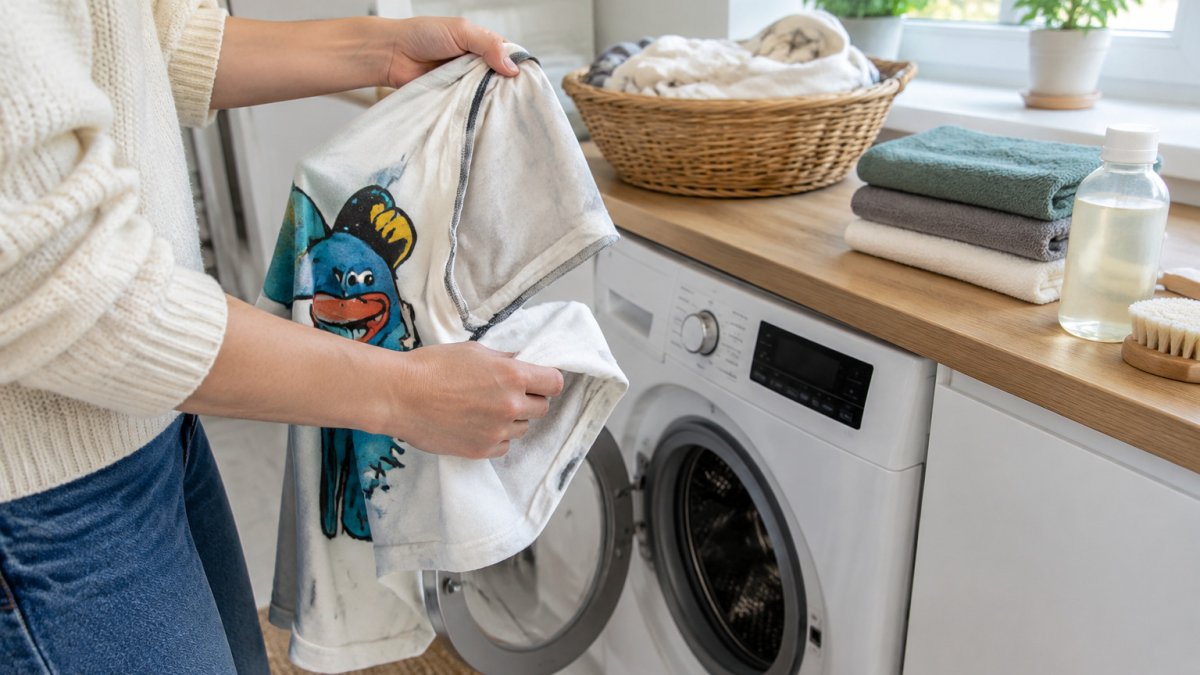
A careful routine helps printed designs last. Wash with similar colours, skip fabric softener on the print side and avoid bleach.
Watch out: Dryer heat is the most common cause of cracked prints. Air dry whenever you can.
How to Dry Cotton Shirts Without Shrinking
Drying is often where organic cotton shirts lose their shape. The fibre is weakest when wet, so how you handle the shirt in the first hour after washing matters a great deal. There are three sensible methods, and each suits a different situation.
Line drying is the lowest-risk option for everyday shirts. Shake the shirt out, fasten the top button, and peg it by the hem or shoulders rather than the collar, which can stretch out of shape under the weight of the wet fabric. Hang it in shade, because direct sunlight fades colour and can make white cotton yellow over time. Turn printed shirts inside out so the design faces away from the light.
Flat drying is the best choice for heavy cotton, knit collars, and anything with embroidery or a large print. Lay the shirt on a clean towel or a drying rack, smooth out the wrinkles with your hands, and reshape the shoulders, collar and hem while the fabric is still damp. Turn the shirt over once after a few hours so the underside dries evenly. This method takes longer but keeps the fit closest to how the shirt left the shop.
Tumble drying is the biggest shrinkage risk. If you must use a dryer, choose the lowest heat setting, use a low spin or gentle cycle, and take the shirt out while it is still slightly damp. Finish it flat or on a padded hanger. Never tumble dry a printed shirt, because the heat is the most common cause of cracked designs.
Watch out: Wringing or twisting a wet shirt distorts the fibres and is a common cause of stretched hems and misshapen collars. Press the water out gently against the side of the basin or roll the shirt in a towel instead.
If a shirt has already shrunk slightly, dampen it again, reshape it gently by hand while it is damp, and dry it flat. This will not reverse major shrinkage, but it can recover a small amount of length. To reduce wrinkles without ironing, hang the shirt on a padded hanger in a steamy bathroom for 10 minutes, or iron it inside out on a low setting while it is still slightly damp.
Your Routine for Keeping Organic Cotton Shirts Looking New
A simple weekly routine is easier to stick to than a complicated one:
- Check the care label before every wash
- Sort by colour and turn shirts inside out
- Wash cold or cool on a gentle cycle
- Use a mild, bleach-free detergent in the amount recommended on the pack
- Treat stains before they go in the machine
- Air dry flat or on a padded hanger
Follow this routine and your organic cotton shirts will keep their softness, shape and print for far longer. You can find the full Baaad Flockers range, including the shop the Mad Moose Casual Drill Shirt, which is made from 100% cotton drill, and the Flying Flock Airforce Overshirt, a heavyweight cotton drill overshirt for layering.
Frequently Asked Questions
What is the best way to wash an organic cotton shirt?
Turn the shirt inside out, wash it on a gentle or delicate cycle in cool water, and use a mild detergent at the dose recommended on the pack. Avoid bleach and fabric softener, which can coat the fibres and reduce breathability over time. Reshape the shirt while damp and dry it flat or on a hanger away from direct heat. Following these steps helps organic cotton keep its colour, shape and softness for longer.
Should organic cotton shirts be washed in cold water?
Cool or cold water is usually the safest choice for organic cotton shirts, particularly dark colours and printed designs, because heat is the main cause of shrinkage and fading. Check the care label first, since some shirts state a specific maximum temperature that should be followed. Washing in cool water also uses less energy, which suits a lower-impact laundry routine.
Can organic cotton shirts go in the tumble dryer?
Tumble drying is best avoided for organic cotton shirts, especially on a high heat setting, because it increases the risk of shrinkage and can weaken printed designs. If you must use a dryer, choose the lowest heat setting and remove the shirt while it is still slightly damp. Air drying flat or on a hanger is the gentlest option and helps the shirt keep its original shape.
How often should you wash an organic cotton shirt?
Wash an organic cotton shirt after it has been worn a few times, or sooner if it has picked up sweat, body oils or visible dirt. Washing less often reduces wear on the fibres and helps graphic prints last longer. Spot clean small marks between washes and air the shirt out after wearing it so it stays fresh without a full wash each time.