 how-to
Funny Slogan Tees: How to Design Your Own at Home
Last Updated: November 6, 2026
Quick Summary
To design funny slogan tees at home, write one short joke, keep it to six words or fewer, and set it in a bold, readable font. Then export a high-resolution file, check it at actual print size, and test it on one shirt before ordering a full run.
- Write a joke that reads in about two seconds, using one topic and one twist.
- Keep the main line to six words or fewer, with one idea per shirt.
- Choose a bold font, keep to one or two fonts, and check contrast against the shirt colour.
- Use about one centimetre of capital height for each metre of viewing distance.
- Order a single test print and ask friends what they read first before a full batch.
Table of Contents
- Start With a Joke That Works on a Shirt
- Keep Your Slogan Short Enough to Read From Across the Pub
- Choose Fonts and Typography That Let the Joke Land
- Lay Out Your Text: Size, Placement and Line Breaks
- How to Make a Slogan T-Shirt Without Professional Software
- Print Methods, Durability and Copyright Checks
- Order Your Design and Test It on Your Own Shirt
- Frequently Asked Questions
Flockers brand know how to make you laugh, and a good funny slogan tees collection is one of the quickest ways to show it. Baaaad Flockers creates original, hand-drawn humour for everyday wear, so we know what makes a slogan land. This guide shows you how to design your own funny slogan tees at home, from the first joke to the final print.
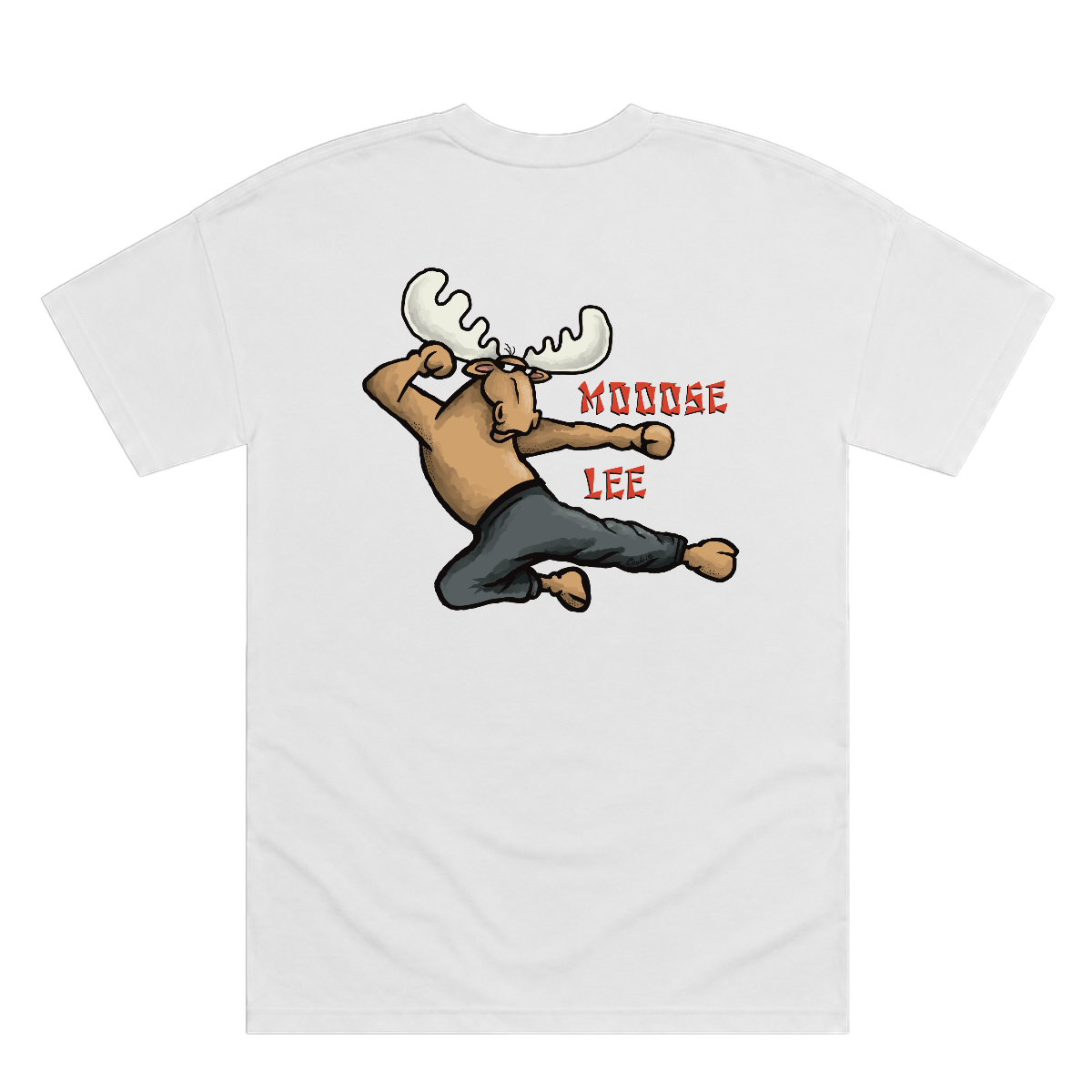
The good news is that you do not need expensive software or a design degree. You need a clear joke, readable text and a sensible plan for getting it onto a shirt. Each step below builds on the last.
Start With a Joke That Works on a Shirt
A slogan tee has to be funny in about two seconds. Someone sees it across a room, gets the joke, and smiles. That is a tough test, so start with a joke that is short and easy to read.
A Simple Framework for Writing Original Slogans
Use this four-step process to write your first draft:
- Pick one topic. Choose one thing you know well, such as a hobby, a habit or a family in-joke.
- Find the twist. Ask what is funny about that topic. Is it an exaggeration, a contradiction or a silly confession?
- Cut every extra word. Most good slogans run from two to six words.
- Test it out loud. If it sounds clumsy when you say it, rewrite it.
That framework gets you a draft, but it does not tell you why a line lands. Most shirt humour relies on one of a small number of structures. Knowing them lets you generate ten options in the time it used to take to think of one.
The four structures that work best on a tee:
- The deadpan confession. State a small, relatable failing as fact. "I meant to behave. I ran out of time." The humour comes from the flat delivery, no exclamation marks, no winking.
- The false authority. Pair a grand claim with a trivial subject. "World's Okayest Cook." The gap between the register and the reality is the joke.
- The misdirect. Set up an expectation in the first line and undercut it in the second. "I love cooking. Mostly the eating part." This is the structure that benefits most from a line break, which is covered in the layout section below.
- The in-joke. A phrase only a specific group understands, a running joke from a workplace, a club or a family. These make the best gifts because the wearer feels seen, but they fail the two-second test for strangers, so use them deliberately.
Turning an idea into shirt copy. Write the full joke first, then cut it in passes. Remove any word the reader can infer. Replace abstract nouns with concrete ones ("snacks" beats "food"). Kill any line that explains the joke, if you have to add "just kidding", the joke is not working.
Worked example. Raw idea: "I am very tired and I like tea." Pass one: "I am tired and I like tea." Pass two: "Tired. Tea. That's it." Pass three: "Tired. Tea. Repeat." The final line is three words, has a rhythm, and reads in one glance.
Original slogans work best when they come from your own life. A joke only you and your friends understand can still be a great gift.
Humour, Audience and Context Checks
Before you commit, check three things:
- Audience: Will the people who see it get the joke, or only you?
- Context: Where will it be worn? A pub, an office or a family day out need different tones.
- Tone: Funny is good. Cruel or crude usually is not. Keep it cheeky, not cutting.
A useful test is the stranger test: imagine a stranger reading the shirt and deciding whether to smile or to look away. If the honest answer is "look away", rewrite it. Workplace events and gifts for people you do not know well are the highest-risk contexts, lean on the deadpan confession and false authority structures there, and avoid in-jokes and anything that targets a group.
Baaaad Flockers designs aim to be humorous but not vulgar. That balance works well for slogan tees people want to wear in public.
Keep Your Slogan Short Enough to Read From Across the Pub
A tee is only funny if people can read it. Long slogans turn into a blur from a few steps away.
Aim for these limits:
- Maximum six words for the main line
- One idea per shirt
- Strong words at the start, where the eye lands first
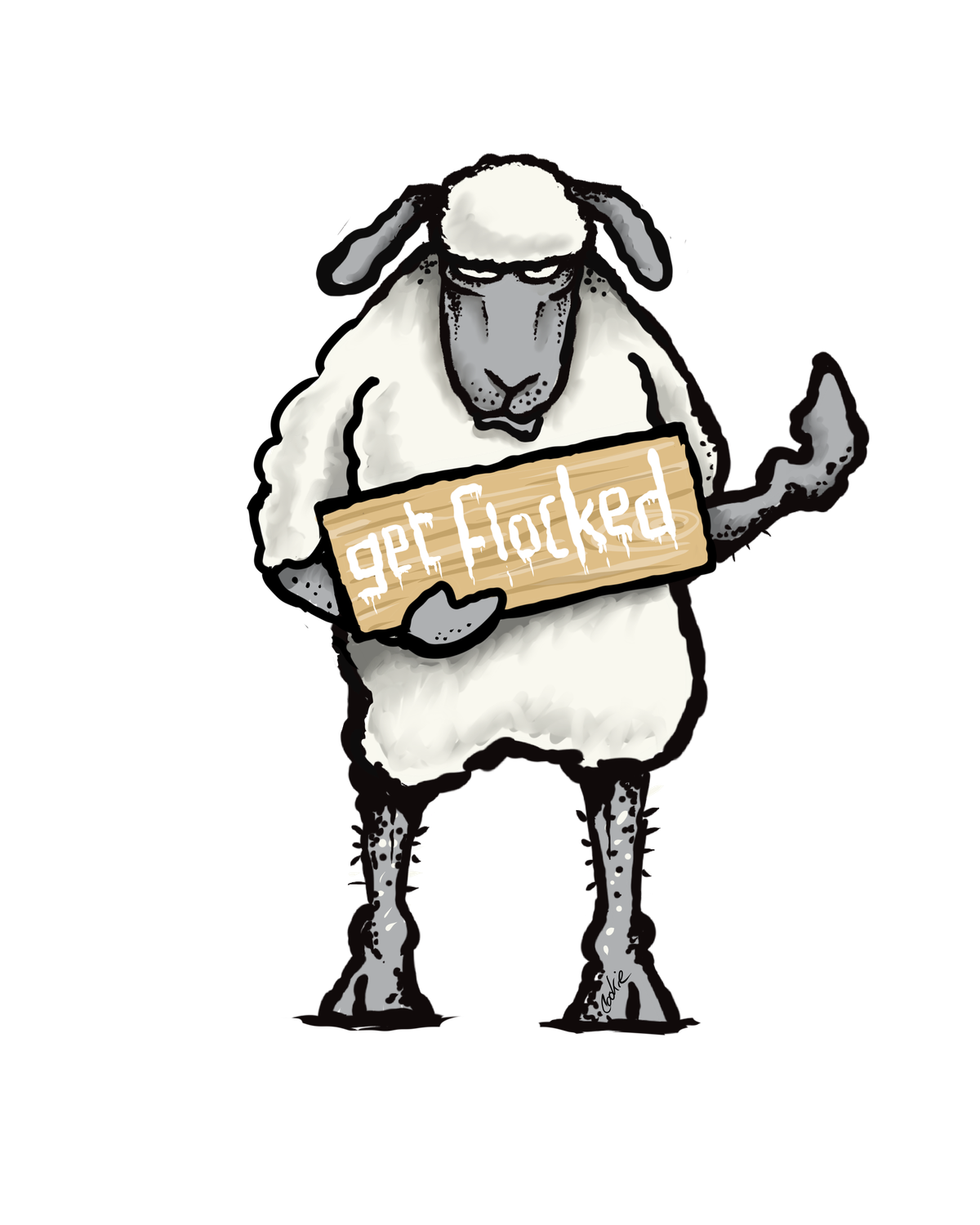
A short line like "Get Flocked!" works because it reads in one glance. If your joke needs a long setup, shorten the setup or move the extra detail to the back of the shirt.
Our Get Flocked! T-shirt is a good example of a single punchy line built for a quick read.
Choose Fonts and Typography That Let the Joke Land
The font you choose can make a joke feel fun or feel messy. Typography is part of the punchline.
Typography and Readability Rules for Funny Slogans
Follow these simple rules:
- Use bold, clear fonts for the main line. Thin, fancy fonts disappear on fabric.
- Keep to one or two fonts. Mixing many styles makes the shirt look busy.
- Check contrast. Dark text on a light shirt, or light text on a dark shirt, is easiest to read.
- Avoid tiny script. Curly handwriting may look charming on screen but blur when printed.
- Print a test. A small test print shows what the font really looks like on fabric.
Those rules stop obvious mistakes, but they do not explain why a slogan that looks fine on a screen can fail on a chest. The missing piece is viewing distance.
The viewing-distance rule. As a working guide, the height of your capital letters should be about one centimetre for every metre of intended viewing distance.
Line breaks are punctuation. Where you break a line tells the reader where to pause, and the pause is often the joke.
Contrast is not just light-on-dark. Mid-tone shirt colours, heather grey, sage, dusty pink, are the hardest to print on because neither black nor white text sits comfortably.
Letter spacing and weight. Tight spacing makes bold capitals collide; loose spacing makes short words drift apart and lose their shape.
Design for a moving person. A shirt is rarely still.
For a quick visual pun, you can make one word bigger than the rest.
Lay Out Your Text: Size, Placement and Line Breaks
Layout decides how fast a joke is understood. Good placement helps the reader hit the punchline in the right order.
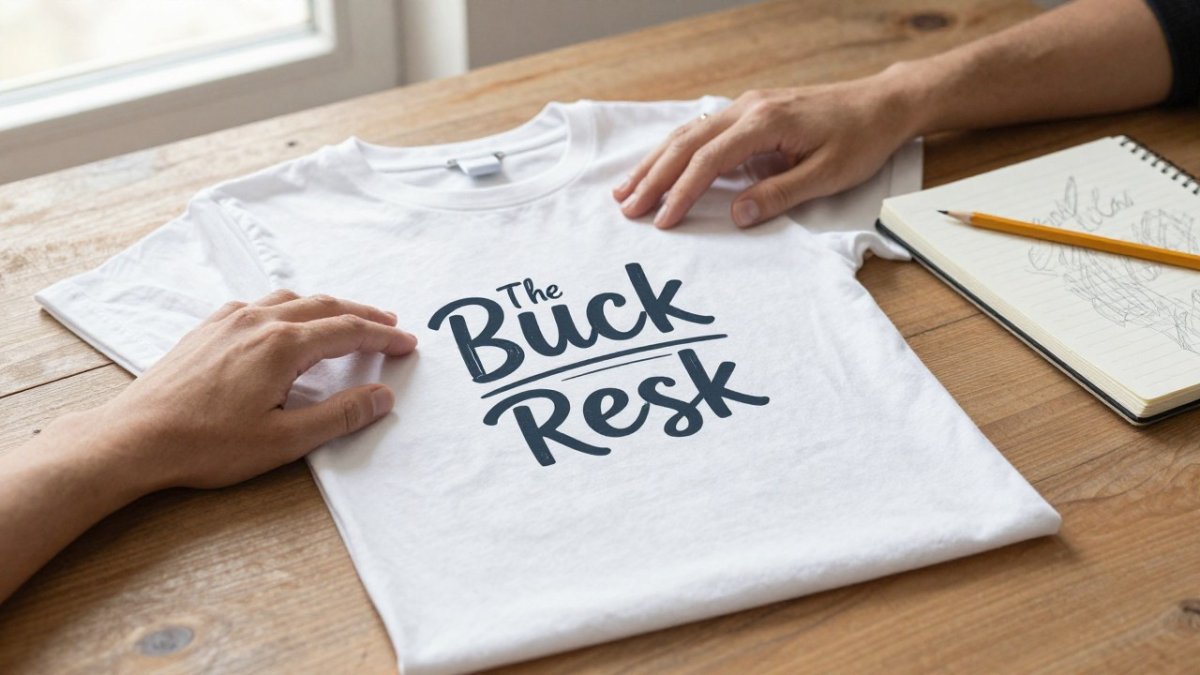
- Size: The main line should fill the chest area without touching the edges. Leave a comfortable margin around the text.
- Placement: Centre the text across the chest for most designs. Shift it slightly if you add an image.
- Line breaks: Break lines where the joke pauses. "Get Flocked." on one line and "Get noticed." on the next can build the rhythm.
- Spacing: Give lines enough room to breathe. Crowded text is hard to read.
Lay out your design on a rough mockup first. Hold a printed mockup against a plain tee to see how the design sits.
How to Make a Slogan T-Shirt Without Professional Software
You can make a good slogan tee with free or simple tools. Here is a basic process:
- Step 1: Write your slogan on paper and count the words.
- Step 2: Open a free online editor or basic image tool and set a square canvas.
- Step 3: Type your line in a bold font and adjust the size until it fits the chest area.
- Step 4: Add an image if you want one. Keep it simple, such as a single sketch or icon.
- Step 5: Export the file as a high-resolution PNG with a transparent background.
- Step 6: Check the file at actual print size before you send it anywhere.
You do not need perfect skills. Clear, simple designs often look better than complicated ones.
Print Methods, Durability and Copyright Checks
How you print the design affects how long the shirt lasts. Common options include screen printing, heat-transfer vinyl and home printing. Each has different strengths. Screen printing is often durable for bold designs in one or few colours. Heat-transfer vinyl suits small runs and fine detail but can crack over time. Home printing is cheap for one-offs but usually less hard-wearing.
Check the washing instructions for the print method you choose.
Copyright matters too. Do not use lines from films, songs or TV shows, and do not copy another brand's logo or artwork. If a quote belongs to someone else, get permission or write your own joke. Original humour is safer and more fun to wear.
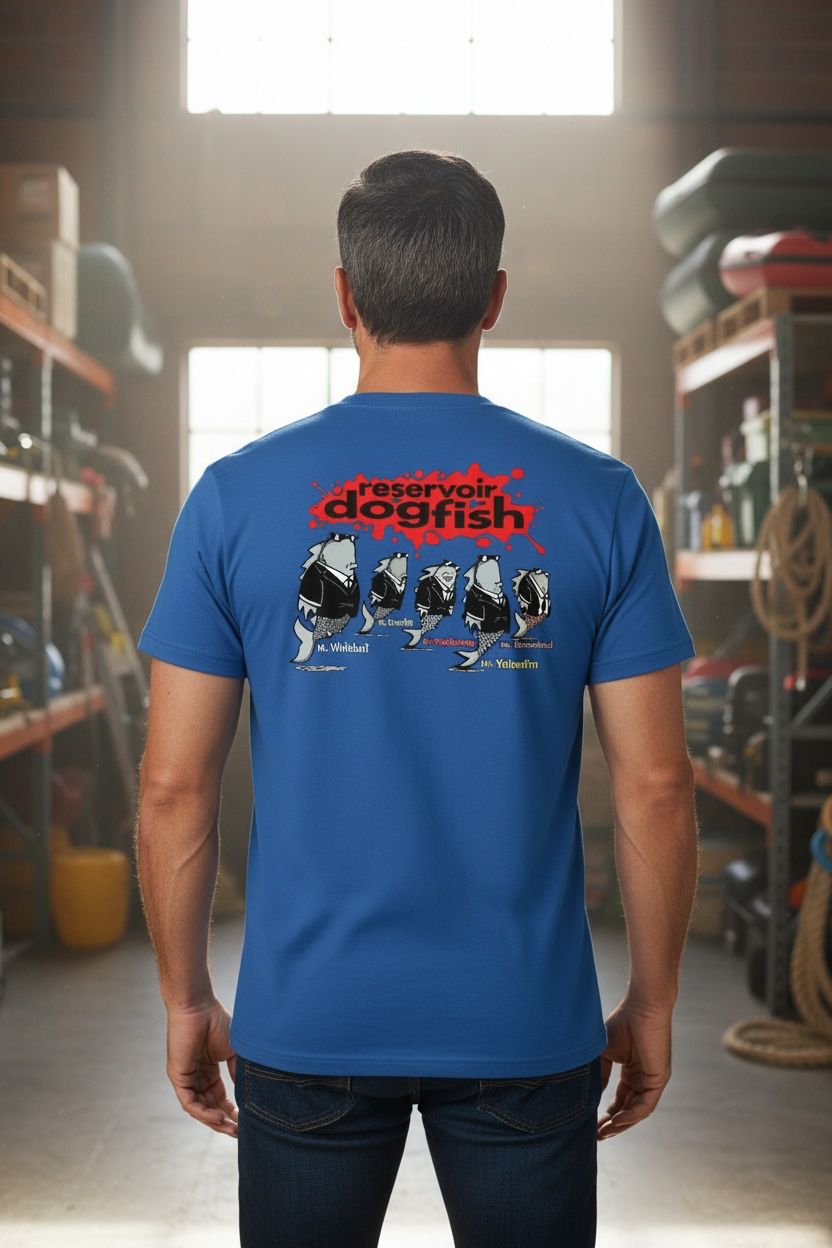
The main print methods differ in durability, cost and suitability, as summarised below.
| Method | Best for | Key difference |
|---|---|---|
| Screen printing | Bold designs in one or few colours | Often durable for bold designs |
| Heat-transfer vinyl | Small runs and fine detail | Can crack over time |
| Home printing | One-off shirts | Cheap, but usually less hard-wearing |
Order Your Design and Test It on Your Own Shirt
Before ordering a full batch, test your design on one shirt. This shows you the real size, colour and wording.
- Order a single sample or print one test on a plain tee you already own.
- Wear it or hold it up and ask a few friends what they read first.
- Adjust the wording, font or size if the joke does not land quickly.
- Then order your full run.
If you would rather skip the design work, Baaaad Flockers has a range of ready-made funny tees you can browse. Our Flockers Make You Laugh Unisex T-Shirt is a good place to start if you want original Cookie artwork and British humour without designing from scratch. Check the website for current prices before you buy.
Now grab a pen, write five silly lines and see which one makes you laugh first. That is usually the one worth printing.
Frequently Asked Questions
How do you come up with a funny slogan for a T-shirt?
Start with something you already find funny, such as a phrase your friends repeat or a situation everyone recognises, then test it. Write five or six versions in a notebook, cut the words that do not add to the joke, and read each one aloud. Show the best two to someone outside your circle. If they laugh without explanation, the slogan is working. If you need to explain it, simplify it or try another angle.
What makes a T-shirt slogan funny?
A good slogan usually has one clear idea, a twist or contrast the reader gets in a second, and no need for context. Puns, understatement and relatable everyday moments tend to work well on shirts because the wearer's personality carries the rest. Keep it clean enough for any setting if you plan to wear it in mixed company. Avoid jokes that depend on a single news story, because they date quickly.
Which fonts work best for T-shirt slogans?
Bold, condensed or slightly chunky sans-serif fonts usually read best at a distance and survive printing well. Very thin scripts and fine serif fonts can break up when printed at small sizes, especially on dark fabric. Choose one main font and at most one accent, and check that the letters still separate clearly when you shrink the design to a preview size on your screen.
How do you make a slogan T-shirt at home?
Write your slogan, pick a readable font, and set the design at the size you want it printed. Export it as a high-resolution file with a transparent background if you plan to use heat-transfer vinyl or a similar method. Test the print on a scrap of similar fabric before committing to a full run. Home methods suit small batches, while a professional printer usually gives more durable results for anything you plan to wash often.