 comparison
Is Organic Cotton Better for Sensitive Skin?
Table of Contents
- What Makes Organic Cotton Different
- Organic vs Conventional Cotton: What the Evidence Shows
- Organic Cotton for Eczema and Dermatitis
- GOTS-Certified Organic Cotton Clothing: What It Actually Means
- How to Wash Cotton Clothes for Sensitive Skin
- Beyond Fabric Choice: What Else Matters
- The Honest Verdict
- Frequently Asked Questions
Last Updated: October 19, 2026
What Makes Organic Cotton Different
Organic cotton is grown without synthetic pesticides, herbicides, or genetically modified seeds. Instead, farmers use natural pest management, crop rotation, and composting to maintain soil health.
When you choose organic cotton, you're selecting fabric grown under stricter environmental standards. But the farming method alone doesn't guarantee softer or higher-quality fabric. Processing, dyes, and finishes matter just as much. Organic cotton provides a cleaner starting point, but what happens next in the mill determines whether that fabric will genuinely suit sensitive skin.
Organic vs Conventional Cotton: What the Evidence Shows
The core difference comes down to pesticide use during cultivation. Conventional cotton farming relies on synthetic chemicals to control pests and weeds; organic farming prohibits these synthetics, using mechanical and biological methods instead.
Pesticide Use and Chemical Residues
Conventional cotton accounts for a significant share of global pesticide use, despite occupying a smaller percentage of total farmland.
The honest assessment: pesticide residues on finished cotton clothing are typically minimal, whether the cotton is organic or conventional. The real difference lies in environmental impact during farming and reduced chemical exposure for farm workers.
For sensitive skin, the more relevant concern is textile processing. Dyes, bleach, and finishing chemicals applied in the mill often irritate skin more than any growing residue.
Processing and Finishing Treatments
After harvest, all cotton goes through similar steps: cleaning, carding, spinning, and weaving. Then comes finishing, and this is where irritation often begins.
Finishing treatments include:
- Bleaching to whiten the fabric
- Dyes for colour
- Chemical finishes for softness, wrinkle resistance, or water repellency
- Sizing agents to help with weaving
Organic cotton can receive the same harsh finishes as conventional cotton. A garment labeled "organic cotton" may still contain synthetic dyes, formaldehyde-based resins, or other irritating chemicals applied after the fiber is certified organic.
The protective advantage depends entirely on whether the manufacturer also uses gentle finishing.
Organic Cotton for Eczema and Dermatitis
People with eczema or dermatitis often find certain fabrics trigger flare-ups. Cotton is generally gentler than synthetics because it breathes better and doesn't trap heat and moisture against the skin. But whether the cotton is organic or conventional matters less than how it's finished and constructed.
What the evidence actually supports
Organic certification confirms how the fibre was grown and, under stricter standards, how it was processed. It does not guarantee that a fabric will prevent eczema flares or allergic reactions, because eczema is driven by genetics, skin-barrier function, immune response, and environmental triggers.
What the evidence does support is more modest: reducing exposure to known irritants and choosing breathable, smooth fabrics can help some people manage symptoms. Most dermatology guidance focuses on irritant avoidance, emollient use, and gentle washing rather than fibre certification alone.
Tailored guidance by skin condition
Eczema (atopic dermatitis). The priority is reducing friction, heat, and chemical irritants. Choose 100% cotton with a smooth weave, flat seams, and no harsh finishes.
Contact dermatitis. This is a reaction to a specific substance, often a dye, resin, or detergent. Patch testing can identify the trigger.
Infant and child use. Babies have thinner skin and a higher surface-area-to-weight ratio, so irritant exposure matters more. Choose simple, well-washed cotton garments, avoid unnecessary finishes, and wash with a fragrance-free detergent.
Clothing, bedding, and what to prioritise
For clothing, fit and seams matter as much as fibre. Loose-fitting garments reduce friction, and flat seams help at pressure points. For bedding, choose breathable cotton sheets and wash them regularly in a gentle detergent; bedding sits against skin for hours, so finishing and detergent choices have a large effect.
A practical checklist for eczema-prone skin:
- Combed cotton, which is softer than carded
- Gentle finishing and low-impact dyes where specified
- Flat seams, smooth labels, or tagless design
- 100% cotton rather than blends with synthetics
- Washing new items before wearing, ideally twice
- Fragrance-free, dye-free detergent and no fabric softener
GOTS-Certified Organic Cotton Clothing: What It Actually Means
GOTS (Global Organic Textile Standard) covers both the organic status of the fibre and a set of processing requirements, which is why it's more informative than a simple "organic cotton" claim. Still, it's important to understand what it verifies and what it doesn't.
Fibre certification versus processing standards
Some labels only verify that the cotton was grown organically. Others, including GOTS, also set requirements for processing, including limits on certain chemicals and restrictions on dyes and finishes.
This distinction matters for sensitive skin. A garment made from certified organic fibre but processed with harsh dyes or easy-care finishes may still irritate reactive skin. A standard that addresses processing gives you more information, though it still doesn't guarantee comfort for every individual.
What GOTS actually verifies
GOTS certification requires:
- Organic farming practices during cultivation
- Limits on chemical inputs during processing, including restrictions on certain dyes and finishes
- Wastewater treatment and environmental criteria at processing facilities
- Social criteria covering labour practices
- Traceability and chain-of-custody from farm to finished product
The standard also sets thresholds for the proportion of organic fibre, which is why you may see different GOTS labels depending on the percentage of organic content.
What GOTS does not guarantee
GOTS does not guarantee that a garment will prevent eczema or allergic reactions. It limits certain harmful substances but doesn't eliminate all potential irritants. Some people react to dyes permitted under the standard, or to finishes and construction details outside its scope. It also doesn't assess fit, seam construction, or how the garment will feel against your skin.
Other labels you may encounter
Beyond GOTS, you may see other certifications and claims. Some focus on organic fibre content, others on harmful substances or processing. Read what each label actually covers rather than assuming all organic claims are equivalent. If a brand says "made with organic cotton", check whether that refers to the fibre only or to the finished product.
Flockers Cotton Tote Bag | Reusable Everyday Shopper | Baaad Flockers® →
How to use certification when shopping
Use GOTS certification as a positive signal that the product has met a recognised standard covering both fibre and processing. Then look for additional information: does the brand specify low-impact dyes? Are seams flat and smooth? Is the garment pre-washed? These practical details often matter more for comfort than the label alone.
If you have a diagnosed sensitivity to a specific dye or finish, ask the brand directly. Certification can tell you what is restricted, but it can't tell you whether a particular garment will suit your skin.
How to Wash Cotton Clothes for Sensitive Skin
What you do after buying a cotton garment matters as much as what you bought. New clothing often contains finishing chemicals, loose dyes, and manufacturing residue that can irritate sensitive skin.
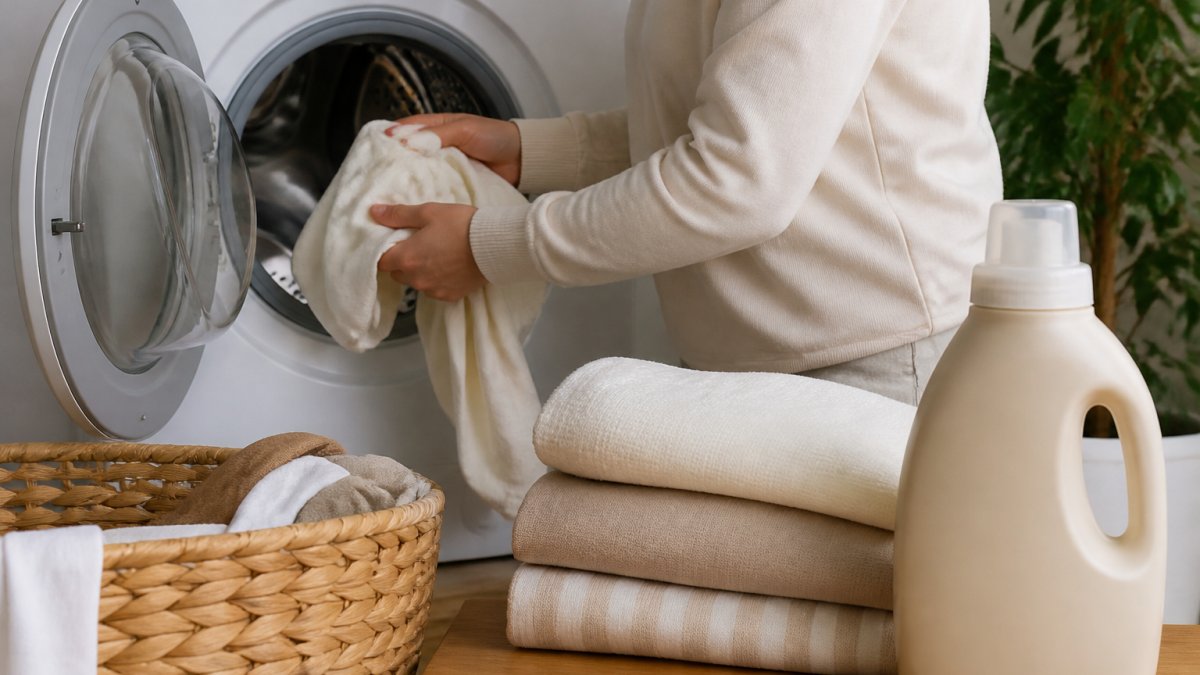
Best practices for washing cotton with sensitive skin:
- Wash before wearing. New garments should be washed in cool water with a gentle, fragrance-free detergent. This removes loose dyes and finishing chemicals.
- Use gentle detergent. Choose detergents without dyes, perfumes, or enzymes. Brands marketed for sensitive skin or baby clothes are usually safe choices.
- Avoid fabric softeners and dryer sheets. These coat the fabric with chemicals that can irritate sensitive skin and reduce breathability.
- Wash in cool or warm water. Hot water can set dyes and damage fibres. Warm water is usually sufficient.
- Dry naturally when possible. Air drying is gentler than machine drying. If you use a dryer, use low heat.
- Wash with similar colours. New dyed cotton can release colour, especially reds and darks. Wash separately the first few times.
- Consider a second wash. For very sensitive skin, washing twice before wearing provides extra assurance.
After the first wash, cotton becomes softer and more comfortable. Repeated washing improves its feel for sensitive skin because it removes any remaining finish and softens the fibres.
Beyond Fabric Choice: What Else Matters
Most guides position fabric choice as the solution to skin sensitivity. In reality, fabric is just one factor. Your skin's reaction depends on:
Garment construction. Flat seams, smooth labels, and careful stitching reduce friction. A poorly constructed organic cotton shirt will irritate more than a well-made conventional one.
Dyes and finishes applied after certification. Organic cotton can still be treated with harsh dyes or chemical finishes.
Detergent and washing method. The soap you use matters more than the fabric type for many people.
Fit and friction. Tight clothing creates friction that irritates sensitive skin. Loose, comfortable fit reduces irritation regardless of fabric type.
Other fibres in the blend. Pure cotton is better for sensitive skin than cotton blended with synthetics.
Personal sensitivity variation. What irritates one person's skin may not affect another.
Some people with sensitive skin react to any dyed fabric, whether organic or conventional. Others tolerate conventional cotton fine but prefer organic for environmental reasons. Your own skin is the best guide.
The Honest Verdict
Is organic cotton better for sensitive skin? It depends on how it's made.
For sensitive skin, choose organic cotton if:
- You want to reduce overall chemical exposure
- You care about environmental impact
- The brand also uses gentle finishing processes and low-impact dyes
- You're willing to wash new garments before wearing them
Conventional cotton can work just as well for sensitive skin if:
- It's carefully finished with low-impact dyes
- The garment is well-constructed with smooth seams
- You wash it thoroughly before wearing
- The fit is comfortable and doesn't create friction
The real differentiator isn't organic versus conventional, it's thoughtful manufacturing. Brands that invest in quality construction, gentle finishing, and transparent labelling tend to produce more comfortable clothing for sensitive skin, regardless of certification.
When shopping, look beyond the organic label.
For clothing that's genuinely kind to sensitive skin, pair natural fibres with thoughtful manufacturing.
Frequently Asked Questions
Is organic cotton better for sensitive skin than conventional cotton?
Organic cotton is grown without synthetic pesticides and typically undergoes less harsh chemical processing, which may reduce irritation for some people. However, the fabric's softness, weave, and how it's dyed matter just as much. Organic certification guarantees farming practices, not skin-friendliness. Some people with sensitive skin benefit from organic cotton; others find conventional cotton equally comfortable. Individual skin reactions vary widely.
Can organic cotton help with eczema?
Organic cotton may help some people with eczema because it avoids certain pesticide residues and often involves gentler processing. However, eczema triggers vary by person. Dyes, finishing treatments, and detergents can irritate skin as much as the cotton itself. If you have eczema, test new textiles on a small area first, wash before wearing, and use fragrance-free detergent. Consult a dermatologist if irritation persists.
What does GOTS certification actually verify?
GOTS (Global Organic Textile Standard) certifies that cotton was grown without synthetic pesticides and that processing met strict environmental and social standards. It does not guarantee the fabric is softer, hypoallergenic, or free from all irritants. Dyes and finishes applied after certification can still cause reactions. GOTS is a reliable marker of organic farming and responsible production, but it's one factor among many for sensitive skin.
How should I wash cotton clothes if I have sensitive skin?
Wash new cotton items before wearing to remove dyes and finishes. Use fragrance-free, hypoallergenic detergent in smaller amounts. Avoid fabric softeners and bleach. Rinse thoroughly. Wash in cool or warm water, not hot. Dry on low heat or air-dry to prevent shrinkage and reduce friction damage. If irritation develops, switch detergent brands or try wool dryer balls instead of commercial softeners.
Does dye or fabric finish cause more irritation than the cotton itself?
For many people, dyes and finishing treatments cause more irritation than the cotton fibre itself. Reactive dyes, formaldehyde-based finishes, and water-repellent coatings can trigger reactions. Even organic cotton can be treated with irritating chemicals after harvest. Washing new garments thoroughly removes loose dyes and some finishes. If you have very sensitive skin, look for undyed or minimally dyed options and always wash before wearing.
Choosing the right fabric for sensitive skin means looking beyond marketing claims. Organic cotton offers environmental and labour benefits, but it's not a magic solution for skin irritation. What matters most is the complete package: the fibre quality, how it's finished, how it's constructed, and how you care for it. Take time to understand what you're buying, wash thoughtfully, and pay attention to how your skin responds. The best fabric is the one that keeps your skin comfortable and healthy.