 how-to
How to Spot High Quality Graphic Tees
Table of Contents
- Check Fabric Weight and GSM
- Examine Stitching and Seam Construction
- Screen Printing vs Digital Printing Quality
- Assess Ink Adhesion and Print Quality
- Evaluate Cotton Quality and Fiber Composition
- How to Wash Graphic Tees Without Cracking
- Spot High Quality Graphic Tees at a Glance
- Conclusion
Last Updated: August 23, 2026
Check Fabric Weight and GSM
Fabric weight, measured in grams per square metre (GSM), is the single best indicator of durability. Lightweight tees (under 150 GSM) feel flimsy and won't withstand regular washing (bsigroup.com). Mid-weight tees (150-180 GSM) strike the sweet spot for everyday wear. Heavyweight cotton (180+ GSM) resists pilling and lasts significantly longer.
What GSM Means and Why It Matters
GSM is the weight of fabric per square metre. Higher GSM means more fibre density. A 140 GSM shirt has roughly half the fabric density of a 280 GSM shirt, a difference you'll feel immediately.
For graphic tees, print durability depends on fabric stability. Thin, loosely woven fabric flexes too much during washing, stressing the ink layer and causing cracks and fading. Denser fabric stays stable, protecting the print from mechanical stress. According to textile standards, British Standards Institution guidance on apparel quality, fabric density is one of the primary factors determining garment longevity.
The Right Weight for Durability
For graphic tees that survive regular wear and washing, aim for 170-200 GSM minimum. This range feels premium without being stiff or uncomfortable. Below 160 GSM, you're compromising durability. Above 220 GSM, the shirt becomes restrictive.
Reputable brands always list GSM on the product description or tag. If a seller won't disclose it, that's a red flag. Hold the shirt up to light, if you can see through it easily, it's too thin.
Examine Stitching and Seam Construction
Poor stitching fails long before the fabric does. You'll see seams come apart, hems curl, and collars fray. Quality construction uses specific techniques that reinforce stress points and distribute wear evenly.
Double-Needle Stitching and Flat-Locked Seams
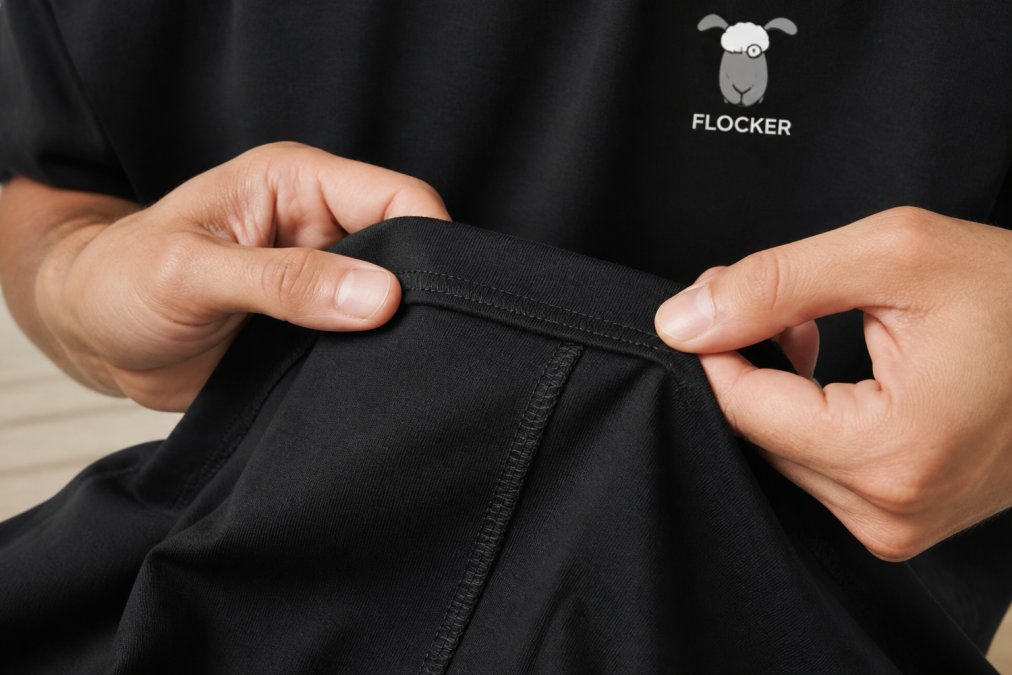
Double-needle stitching uses two needles simultaneously, creating two parallel rows of thread instead of one. This doubles thread strength in critical areas like armholes, necklines, and sleeve hems. Single-needle stitching is cheaper but fails faster.
Flat-locked seams lay fabric edges flat against each other instead of using traditional sewn seams that can fray or curl. The result is a seam that won't unravel, even after dozens of washes. Budget tees often skip this step entirely.
Run your finger along the inside seams. High quality graphic tees have smooth, consistent stitching with even stitch length. You shouldn't see loose threads, puckering, or uneven tension.
Shoulder Tape and Neck Ribbing Quality
Shoulder tape is a strip of fabric sewn into the shoulder seam that prevents stretching and maintains shirt shape. Budget brands skip it entirely. Quality manufacturers always include it.
Neck ribbing is the elastic band around the neckline. Poor ribbing loses its stretch after a few washes, leaving the collar permanently loose. Quality ribbing uses a tighter knit construction with better elasticity recovery. Gently stretch it, quality ribbing bounces back immediately. Cheap ribbing stays stretched.
Screen Printing vs Digital Printing Quality
The printing method fundamentally affects how well a design survives washing. Screen printing and direct-to-garment (DTG) printing are the two dominant methods, each with different durability characteristics.
How Screen Printing Affects Durability
Screen printing uses a mesh screen to push ink directly onto fabric. The ink sits on top of the fibres rather than bonding to them, creating vibrant, opaque colours that resist fading. However, screen-printed designs can crack if the fabric flexes too much during washing, especially on lower-quality shirts.
Quality screen printers use ink formulations that bond better to the fabric and cure (heat-set) the print to lock the ink permanently. Look closely at screen-printed designs, the best ones have crisp edges and consistent colour saturation. The ink should feel slightly raised but not thick or plasticky.
Direct-to-Garment (DTG) Printing and Longevity
DTG printing works like an inkjet printer, spraying ink directly onto fabric, which then bonds through heat curing. DTG allows for photorealistic designs with unlimited colours, something screen printing can't easily achieve.
The downside: DTG ink sits on the fabric surface rather than penetrating it. With lower-quality DTG, the ink can wash away faster than screen printing. However, premium DTG operations use high-quality inks and proper curing that produces excellent longevity.
DTG prints feel softer than screen prints because the ink layer is thinner. This is preferable for comfort, though it can feel less durable at first touch. Quality DTG prints maintain colour and don't crack.
Assess Ink Adhesion and Print Quality
Ink adhesion determines whether a print lasts for years or months. A design can look perfect in the shop but fail within a few washes if the ink doesn't bond properly to the fabric.
Visual Inspection for Print Defects
Examine the design under good lighting. Look for these quality markers:
- Colour consistency: The colour should be uniform across the entire design. Lighter or darker patches suggest uneven ink application or poor curing.
- Edge definition: Edges should be sharp and clean. Blurry or feathered edges indicate the ink bled into the fabric.
- No visible cracks: Even new tees shouldn't show cracks in the print.
- No pilling under the print: Run your finger across the design. If you feel small bobbles, the fabric underneath is low quality.
Feel the print with your fingertips. Quality prints feel smooth and bonded to the fabric. They shouldn't feel plasticky, sticky, or tacky.
Testing Colorfastness and Cracking
Colorfastness refers to how well the print resists fading. Quality prints maintain their original colour through dozens of washes. Budget prints fade noticeably after just a few washes.
Cracking happens when the ink layer is too thick or the fabric underneath is too flimsy. As the shirt flexes during wear and washing, the print cracks. Quality prints flex with the fabric instead of cracking.
Reputable brands provide detailed care instructions. They'll recommend washing in cold water, drying on low heat, and washing inside out, best practice for any graphic tee.
Evaluate Cotton Quality and Fiber Composition
Not all cotton is created equal. The quality of the base fabric determines how well it holds up over time and how the print adheres to it.
Ring-Spun and Combed Cotton Benefits
Ring-spun cotton is produced using a specific spinning method that creates stronger, finer yarn. The process twists the fibres tightly together, creating yarn with better integrity. Shirts made from ring-spun cotton feel softer and more durable.
Combed cotton has been processed to remove short fibres and impurities, creating smoother, more uniform yarn that produces softer fabric with better colour retention. Combed cotton also resists pilling better than regular cotton.
The best graphic tees use 100% combed ring-spun cotton. Look for these terms on product descriptions. If a shirt just says "cotton" without qualification, it's likely standard cotton that won't perform as well.
Hand-Feel and Fabric Density Tests
Hold the shirt and assess the hand-feel. Quality cotton feels soft but substantial. It should have a slight nap (texture) that feels smooth when you run your hand across it.
Press your thumbnail into the fabric and hold for a few seconds. Quality cotton shows a slight impression that fades quickly. Budget cotton either shows a deep impression that takes forever to fade, or springs back too quickly, indicating weak fibre structure.
Check the fabric density by holding the shirt up to light. You shouldn't be able to see through it clearly.
How to Wash Graphic Tees Without Cracking
Even the highest quality graphic tee will fail if you wash it incorrectly. Proper washing technique extends print life dramatically.
Washing Techniques That Preserve Prints
Turn the shirt inside out before washing to protect the print from direct friction. Wash in cold water, hot water breaks down ink adhesion faster and causes colours to fade. Use a gentle cycle or hand wash if the shirt is new or the print is particularly delicate.
Use mild detergent designed for delicate fabrics. Avoid bleach and fabric softener. Bleach attacks the ink directly. Fabric softener coats the fabric and interferes with ink adhesion.
Don't overload the washing machine. Graphic tees need space to move freely. Wash with similar colours to prevent dye transfer.
Drying Methods and Storage
Air drying is the best option for graphic tees. Hang the shirt on a line or lay it flat on a clean surface. Avoid direct sunlight, which fades colours over time. If you must use a dryer, use the lowest heat setting and remove the shirt while still slightly damp.
Never put a graphic tee in the dryer on high heat. High heat accelerates ink degradation and causes the fabric to shrink.
Store graphic tees flat or hung on padded hangers. Keep them in a cool, dry place away from direct sunlight.
Spot High Quality Graphic Tees at a Glance
After examining hundreds of graphic tees, certain visual and tactile cues immediately signal quality. You can identify a well-made shirt in seconds once you know what to look for.
Your Visual Inspection Checklist
Use this checklist when shopping for high quality graphic tees:
- Fabric feels substantial but not stiff (170+ GSM estimated)
- Double-needle stitching visible on all seams
- Shoulder tape present and secure
- Neck ribbing feels snug and recovers quickly when stretched
- Print has crisp edges with no bleeding or feathering
- Print colour is consistent across the entire design
- No visible cracks, pilling, or defects in the print
- Print feels smooth and bonded to fabric, not plasticky
- Tag clearly states GSM, cotton type, and care instructions
- Seams are straight, even, and secure with no loose threads
If a shirt passes all these checks, it's almost certainly high quality. If it fails more than two, keep looking.
What to Avoid in Budget Tees
Budget graphic tees have predictable failure patterns:
- Thin, flimsy fabric that feels like tissue paper
- Single-needle stitching that looks loose or uneven
- No shoulder tape or visible reinforcement at stress points
- Collar ribbing that's already loose or wrinkled
- Print that looks dull, faded, or inconsistently coloured
- Visible cracks or damage in the print
- Print that feels plasticky, thick, or raised
- No GSM or fabric composition information on the tag
- Seams that look rushed or poorly finished
These tees might look fine in the shop, but they'll disappoint within a few washes.
Finding high quality graphic tees means knowing exactly what to look for during your inspection. Once you understand fabric weight, stitching construction, print methods, and ink adhesion, you can confidently identify shirts that will last. Baaaad Flockers graphic tees are engineered with all these quality markers built in, from the premium combed cotton and double-needle stitching to the screen printing that's properly cured for longevity. When you're shopping for statement pieces that genuinely hold up, check the fabric weight, examine the seams, test the print adhesion, and assess the cotton quality. These steps take two minutes but predict whether your tee will last for years or fall apart in months. Explore Men's Tees from Baaaad Flockers and experience the difference that genuine quality construction makes in everyday wear.
Frequently Asked Questions
Q: How can you tell if a graphic tee is high quality?
A: High quality graphic tees show several telltale signs: heavyweight fabric (typically 180-220+ GSM), double-needle stitching on seams, reinforced neck ribbing, and sharp, vibrant prints with no cracking or peeling. Run your hand over the fabric, premium tees feel dense and soft, not thin or papery. Check the collar for shoulder tape and inspect the print closely for even ink coverage and clean edges. Brands using ring-spun or combed cotton deliver superior durability and hand-feel.
Q: What is GSM in t-shirts, and what's a good weight?
A: GSM (grams per square metre) measures fabric density and weight. Higher GSM means thicker, more durable fabric. For graphic tees, 180-220 GSM is standard quality; 220+ GSM is considered heavyweight and premium. Anything below 150 GSM feels flimsy and wears out quickly. Heavyweight tees resist pilling, maintain their shape longer, and provide better print longevity because the denser fabric anchors ink more securely.
Q: Does the printing method affect how long a graphic tee lasts?
A: Absolutely. Screen printing creates a thicker ink layer that bonds well to heavyweight fabric, making it extremely durable for long-term wear. Direct-to-garment (DTG) printing applies ink directly onto the fabric, offering vibrant detail but potentially less durability on lower-quality fabrics. Quality matters more than method, a well-executed screen print on 220 GSM cotton will outlast a poor DTG print on lightweight fabric.
Q: How do I wash graphic tees to prevent the print from cracking?
A: Turn the tee inside out before washing to protect the print from friction. Wash in cold water on a gentle cycle with mild detergent, hot water weakens ink adhesion. Avoid bleach and fabric softener, which degrade both fabric and print. Air dry or tumble dry on low heat; high heat accelerates cracking. Store flat or folded, never hanging, to prevent stretching. Washing inside out is the single most effective step to preserve graphic tee prints over time.
This article was written using GrandRanker