 how-to
How to Choose Soft Fabrics for Graphic Sweaters
Table of Contents
- What Makes a Fabric Soft for Graphic Sweaters
- Cotton vs Polyester for Graphic Prints
- Fabric Weight and GSM Explained
- French Terry and Fleece: Texture Matters
- Breathability and Moisture-Wicking in Daily Wear
- How to Care for Soft Graphic Sweaters
- Durability and Print Longevity: What to Expect
- Frequently Asked Questions
Last Updated: September 22, 2026
What Makes a Fabric Soft for Graphic Sweaters
Softness isn't just about how a fabric feels against your skin. It's about fibre type, construction method, and how the fabric is finished after weaving. Learning how to choose soft fabrics for graphic sweaters means making a choice about comfort, durability, and how well your design will look over time.
The best soft fabrics for graphic sweaters balance three things: tactile comfort, print longevity, and everyday wearability. Natural fibres like cotton tend to feel softer initially, but they can shrink and fade. Synthetic blends offer better durability but need the right construction to avoid feeling plastic-like.
The secret isn't picking the softest fabric available, it's finding the fabric that stays soft after washing, holds the graphic print without cracking, and feels good enough to wear repeatedly.
Cotton vs Polyester for Graphic Prints
Cotton and polyester are the two main contenders for graphic sweaters, and they behave very differently.
Cotton feels softer straight out of the box. It breathes well and feels natural against skin. The downside: cotton shrinks, fades faster when printed, and can pill with repeated washing. For graphic prints, the ink sits on top of cotton fibres, which means friction and washing can crack the print over time.
Polyester blends offer better print durability. The synthetic fibres are more uniform, so screen-printed graphics adhere more evenly. Polyester doesn't shrink the way cotton does, and colours stay brighter longer. But pure polyester can feel stiff and plasticky unless the fabric is brushed or treated properly.
A cotton-polyester blend can offer the best of both worlds, combining the soft feel of cotton with the print-holding properties of polyester, adding durability without sacrificing the natural feel.
Why Organic Cotton Feels Different
Organic cotton is grown without synthetic pesticides or fertilisers. The fibres are slightly less uniform than conventional cotton, which actually makes them softer. Organic cotton also tends to be processed with fewer harsh chemicals, so the natural softness remains.
The trade-off: organic cotton is more expensive and still shares cotton's shrinkage and fading issues.
Polyester Blends and Hand-Feel
A polyester blend doesn't have to feel synthetic. The key is how the fabric is finished. Brushed polyester has a soft, fuzzy surface that mimics cotton. Combed polyester is smoother and more refined. Both can feel genuinely soft if the blend ratio is right.
:::pro tip A 50/50 cotton-polyester blend with brushing can offer a good balance: soft like cotton, durable like polyester, and forgiving during washing.
Fabric Weight and GSM Explained
GSM stands for grams per square metre. It's the standard measurement for fabric weight and density. Understanding GSM helps you choose a sweater that will actually feel good and last.
Light vs Heavyweight Sweaters
A light sweater is easier to pack and comfortable in transitional weather. But if your graphic sweater is meant to last and be worn repeatedly, lightweight fabrics show wear faster. The print is more exposed to friction, and the fabric itself thins over time.
French Terry and Fleece: Texture Matters
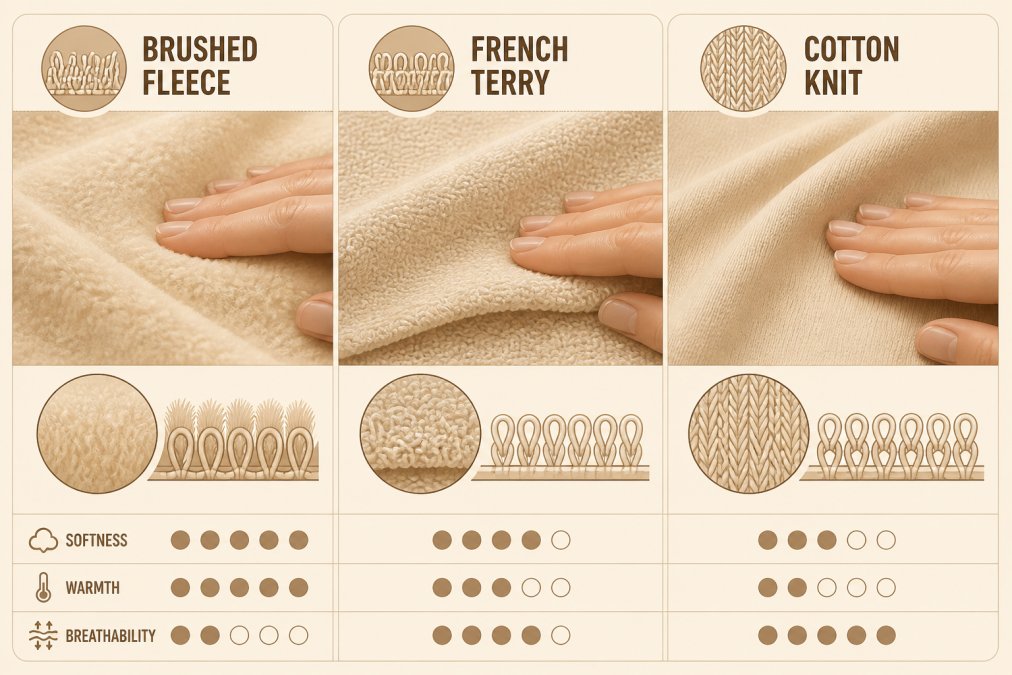
French Terry and fleece are looped knit structures that create softness through their construction, not just fibre type.
Breathability and Moisture-Wicking in Daily Wear
A soft fabric that traps sweat isn't actually soft to wear. Breathability matters for comfort, especially if you're wearing your sweater for extended periods. But breathability also affects how the fabric feels against your skin, a critical factor competitors overlook when discussing softness.
Sensory Comfort and Fabric Breathability
For people with sensitive skin or sensory sensitivities, breathability directly affects comfort. Fabrics that trap moisture can feel sticky or restrictive, which triggers discomfort even if the fibre itself is soft. When choosing a graphic sweater for sensitive wear, prioritise:
- Looser weave structures (like French Terry) that allow air circulation without feeling thin or see-through
- Moisture-wicking blends that prevent the clammy sensation of sweat pooling against skin
- Natural-fibre content (at least 50% cotton or linen) for breathability without synthetic feel
How to Care for Soft Graphic Sweaters
How you wash and dry your sweater matters as much as the fabric itself for maintaining softness.
Washing Without Damaging Prints
Turn your sweater inside out before washing. This protects the graphic print from direct friction and abrasion. Wash in cold water with a gentle detergent. Hot water can cause shrinkage and fade colours faster.
Preventing Pilling and Maintaining Softness
Pilling happens when fibres break loose and ball up on the surface. It's most common with synthetic blends and fleece. To prevent pilling:
- Wash with like colours to reduce friction
- Use a lower spin speed on your machine
- Avoid washing with rough fabrics like denim
- Remove pills gently with a fabric shaver or lint roller
Durability and Print Longevity: What to Expect
A soft fabric that loses its graphic after five washes isn't actually a good choice, no matter how comfortable it feels initially. Understanding how softness and durability interact is crucial.
How Soft Fabrics Degrade During Washing
Pilling occurs when surface fibres break loose and tangle into balls. Soft fabrics, especially brushed polyester and fleece, are prone to pilling because the brushing process deliberately raises fibres. A soft fleece sweater may show visible pilling around the collar, cuffs, and underarms where friction is highest.
Fabric Weight and Print Longevity
Screen-printed graphics adhere better to denser fabrics with consistent fibre structure. Here's what to expect:
- Lightweight fabrics (140-180 GSM): Print durability is 15-30 washes before visible cracking. The fabric itself thins noticeably.
- Midweight fabrics (180-250 GSM): Print durability is 50-75 washes with proper care. This is the practical sweet spot for everyday wear.
- Heavyweight fabrics (250+ GSM): Print durability is 75-100+ washes. The dense structure protects the graphic, but the fabric may feel stiff initially.
Best Fabrics for Durability Without Sacrificing Softness
The best fabrics for graphic longevity are:
- Cotton-polyester blends (60/40 or 50/50): The polyester stabilises the weave and protects prints; the cotton provides softness. These blends typically deliver 60-80 wash cycles before noticeable wear.
- Brushed fleece (with caveats): Incredibly soft, but pills easily and isn't ideal for screen prints. Better for embroidered or heat-transfer graphics.
- French Terry with adequate weight (200+ GSM): Soft on one side, smooth on the other. The loop structure traps air for warmth whilst the dense weave protects prints. Typically lasts 70-90 washes.
- Pre-shrunk fabrics: Critical. If fabric shrinks after printing, the print shifts and cracks. Always choose pre-shrunk blends.
Washing Practices That Extend Print Life
Even the best fabric loses durability with poor care. To maximise print longevity:
- Turn your sweater inside out before washing to reduce friction on the graphic.
- Wash in cold water (below 30°C) to prevent dye bleeding and fibre weakening.
- Use a gentle or delicate cycle; heavy agitation breaks down fibres faster.
- Avoid fabric softeners, which coat fibres and reduce breathability over time.
- Air-dry whenever possible. Tumble drying causes friction that accelerates pilling and fibre breakdown.
- Wash with similar colours and weights to reduce abrasion.
Frequently Asked Questions
What is the softest fabric for graphic sweaters?
Organic cotton and cotton-blend fabrics with a brushed finish offer the softest feel. French terry and fleece-backed materials provide exceptional softness due to their looped structure, which traps air and creates a plush surface. The softness depends on fibre length, GSM weight, and whether the fabric has been brushed or napped during manufacturing. Higher-quality blends combining cotton with small amounts of polyester can feel equally soft whilst offering better durability for graphic prints.
Is a cotton-polyester blend better for graphic sweaters than 100% cotton?
Cotton-polyester blends offer distinct advantages for graphic sweaters. A cotton-polyester blend can combine the breathability and comfort of cotton with the durability and colour-fastness of polyester. This blend can resist shrinkage better than pure cotton, maintain print quality through more wash cycles, and provide excellent softness when the fabric has been properly finished. However, 100% organic cotton feels softer initially but may shrink and lose its shape over time. The blend is the practical choice if you want soft fabrics that hold up to regular wear and washing.
How does fabric weight affect the softness of a graphic sweater?
Fabric weight, measured in GSM (grammes per square metre), directly influences both softness and durability. Lightweight fabrics (under 200 GSM) feel delicate but lack structure and warmth. Medium-weight fabrics can balance softness with practicality for everyday wear. Heavyweight fabrics can feel substantial and luxurious, offering warmth and a more plush hand-feel, though they take longer to dry. For graphic sweaters, a heavier GSM fabric can provide a good combination of softness, durability, and comfort without feeling stiff or heavy.
Does the printing method affect how soft a graphic sweater feels?
Yes, the printing method significantly impacts softness. Screen printing, when applied correctly, sits on the fabric surface and can feel stiff if too much ink is used. Direct-to-garment printing creates softer results because the ink bonds with the fibres rather than sitting on top. The key is proper curing and ink formulation, quality printers use soft-hand inks designed to maintain fabric flexibility. A well-printed graphic on soft fabric should feel almost as smooth as the unprinted areas. Poor printing techniques can make even premium soft fabrics feel uncomfortable, which is why construction quality and print expertise matter as much as the base fabric itself.
Choosing the right soft fabric for a graphic sweater means balancing comfort, durability, and print longevity. A cotton-polyester blend at 200-250 GSM with brushed or French Terry construction gives you genuine softness that lasts. The best graphic sweaters feel good on day one and feel even better after a dozen washes. Explore our range of heavyweight graphic hoodies at Baaaad Flockers and discover how softness and durability can actually go together.