 how-to
How to Choose Durable Graphic Tees: A Buyer's Guide
Table of Contents
- What Makes a Graphic Tee Durable
- Best Fabric for Graphic Tees: Cotton, Blends, and Weight
- Long-Lasting T-Shirt Printing Methods Explained
- Construction Quality: Seams, Stitching, and Fit
- How to Wash Graphic Tees to Extend Their Life
- Your Durable Graphic Tee Checklist
- Frequently Asked Questions
Last Updated: October 16, 2026
What Makes a Graphic Tee Durable
A durable graphic tee combines three elements: fabric that resists wear, printing that doesn't crack or fade, and construction that survives repeated washing.
Durability isn't one thing: a thick tee with poor stitching falls apart, while a thin one with excellent construction can outlast it.
Here's what separates a tee that lasts from one that doesn't:
- Fabric weight and blend, how the base material holds up over time
- Print method, whether the graphic survives 50+ washes
- Seam quality, reinforced stitching that doesn't unravel
- Fit and construction, proper collar and sleeve reinforcement
- Care instructions, how you wash it matters just as much
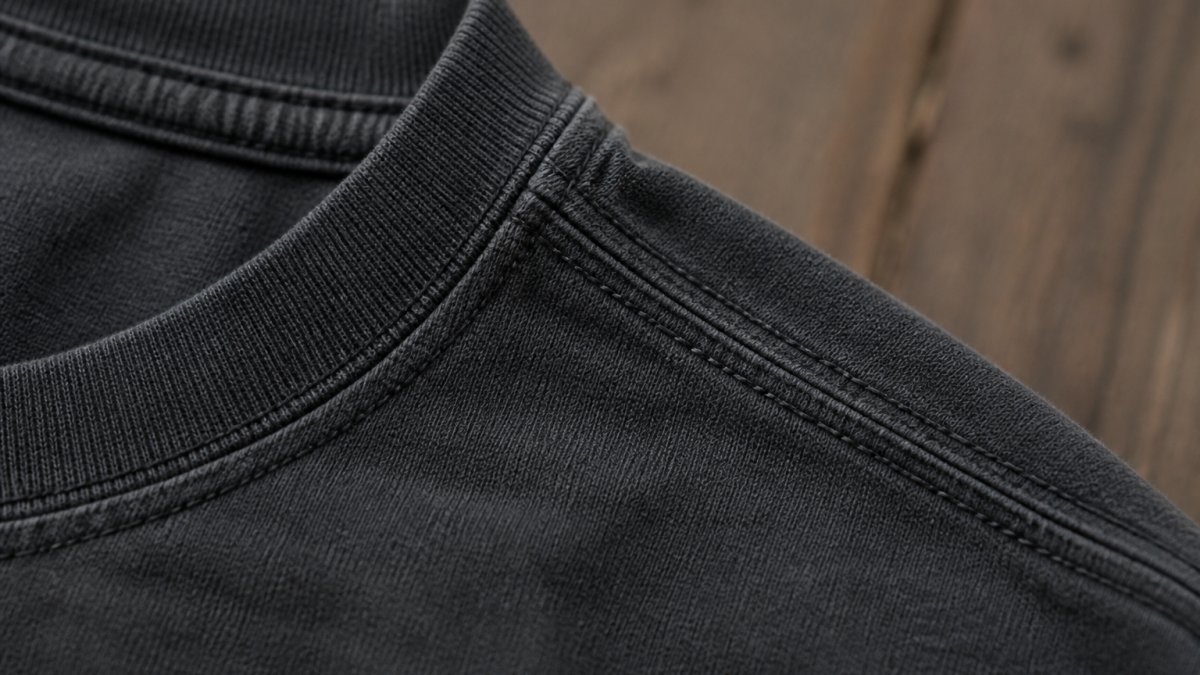
You don't need to be an expert: once you know what to check, evaluating any shirt takes about 30 seconds.
Best Fabric for Graphic Tees: Cotton, Blends, and Weight
The fabric you choose determines how soft the shirt feels, how well it breathes, and how long it lasts.
Pure Cotton vs Blended Jersey
Pure cotton graphic tees feel softer and breathe better than blends, but they shrink more readily, a 100% cotton tee can lose 3-5% in the first wash with hot water and a dryer.
Blended jersey (usually cotton with polyester) shrinks less and lasts longer through repeated washing, since synthetic fibres resist pilling and fading, though it feels slightly stiffer.
Here's the practical trade-off:
- 100% cotton: Softest feel, best breathability, requires careful washing
- Cotton-polyester blend (80/20 or 85/15): Durable, holds colour better, slightly less soft
For everyday wear and durability, an 80/20 cotton-polyester blend is the sweet spot. You get comfort without sacrificing longevity.
180 GSM vs 200 GSM T-Shirt: What the Numbers Mean
GSM (grams per square metre) measures fabric weight, higher GSM means thicker, heavier fabric.
A 180 GSM t-shirt is lightweight and comfortable for warm weather; a 200 GSM shirt feels more substantial and lasts longer.
Here's what you notice:
- 180 GSM: Thinner, softer, good for layering, less durable
- 200 GSM: Thicker, holds its shape better, more durable, better for graphic printing
Most quality graphic tees sit between 180-220 GSM; below 150 GSM feels flimsy, and above 250 GSM is heavy and warm.
For durability, aim for 200 GSM or higher. The thicker fabric protects the graphic print better and resists pilling and wear.
Long-Lasting T-Shirt Printing Methods Explained
The graphic is only as durable as the method used to apply it. Three techniques dominate: screen printing, direct-to-garment (DTG), and embroidery.
Screen Printing vs Direct-to-Garment vs Embroidery
Screen printing pushes ink through a mesh screen onto the fabric, creating a raised finish.
The downside: screen printing works best for designs with 2-4 colours. Complex, photo-realistic graphics don't print well this way.
Direct-to-garment (DTG) printing sprays ink directly onto the fabric like an inkjet printer.
Embroidery stitches thread into the fabric. It's incredibly durable and adds texture. Embroidered graphics can last for years. The trade-off: embroidery works only for simple designs and costs more.
Here's the durability ranking:
| Method | Durability | Best For | Colour Limit |
|---|---|---|---|
| Screen printing | 100+ washes | Bold, simple designs | 2-4 colours |
| Embroidery | Years of wear | Logos, text | Any colour |
| Direct-to-garment | 30-50 washes | Photo-realistic designs | Unlimited |
For a durable graphic tee, screen printing wins. The graphic stays vibrant, the finish feels quality, and it actually lasts.
Construction Quality: Seams, Stitching, and Fit
Even perfect fabric and printing fail if the seams split. Construction quality is something you can assess in seconds with your hands and eyes.
Stitch type and density
Look at the inside of the shirt, not the outside. A durable tee uses a double-needle coverstitch at the hem and sleeves, two parallel rows of stitching visible on the outside, with a looped stitch on the inside that allows the seam to stretch without snapping. Check stitch density along a side seam: quality construction runs 10-12 stitches per inch, while fewer than 8 signals a loose, weak seam that will unravel.
Collar recovery
The collar is the first part of a graphic tee to fail. A ribbed collar with elastane (often listed as 2-5% elastane or spandex) recovers its shape after stretching; a 100% cotton ribbed collar without elastane will stretch out permanently. Test it before buying: stretch the collar gently, release, and watch whether it snaps back flat. Also check for a taped neck seam, a strip of fabric covering the raw seam where the collar meets the body. Untaped neck seams rub, fray, and split.
Shoulder and side seams
Reinforced shoulder seams often use taped or bound seams, a fabric strip sewn over the raw edge that distributes stress across the shoulder rather than concentrating it at the stitch line. On a cheaper tee, the shoulder seam is a simple overlock stitch that can pull apart under a backpack strap. Run your fingers along the side seam: it should feel flat and even, with no puckering or skipped stitches.
Flockers Make You Laugh Unisex T-Shirt | Funny British Graphic Tee | Baaad →
Hem and sleeve finish
A flat, consistent hem with a double-fold (the fabric folded under twice before stitching) resists curling and fraying; a single-fold hem is thinner, cheaper, and tends to roll up after washing. Uneven hem stitching is one of the most common quality-control failures in low-cost graphic tees.
Fit as a durability factor
Fit isn't just about looks. A too-tight shirt stretches the seams with every movement, accelerating wear at the armholes and side seams; too loose and you'll catch it on door handles and bag straps.
When you try on a graphic tee, check:
- Shoulder seam sits at your actual shoulder bone, not hanging past it
- Sleeve length reaches mid-bicep (longer sleeves catch on things; shorter sleeves stretch the armhole)
- Chest room allows one finger between fabric and body when you breathe in
- Length reaches hip without excessive draping
- Armhole sits close to the body without digging in
A well-fitted tee from quality fabric lasts longer because it experiences less mechanical stress.
How to Wash Graphic Tees to Extend Their Life
The best durable graphic tee fails if you wash it wrong. "Wash cold and air dry" is standard advice, but it doesn't explain why certain practices damage specific print types.
Why heat is the enemy of both fabric and print
Heat causes two problems. It weakens the elastane in ribbed collars and blends, so collars stretch out and tees lose shape. It also accelerates dye migration and binder breakdown in prints: plastisol ink softens and cracks when repeatedly heated, and DTG inks fade faster. Cold water (30°C or below) cleans just as effectively for everyday soil and sweat, the exception is genuinely soiled workwear, where a 40°C wash may be needed, so check the care label first.
Match care to print type
Different print methods have different vulnerabilities:
- Screen printing (plastisol ink): The ink sits on top of the fabric. It resists washing well but cracks if flexed repeatedly while hot, so never iron directly over the print, and avoid tumble drying. Turn inside out to protect the print from abrasion against other garments.
- Direct-to-garment (DTG): The ink soaks into the fibres and is more fragile. Wash inside out on a gentle cycle, avoid fabric softener (it coats the fibres and dulls the print), and never use bleach. DTG prints fade gradually, cold washing and air drying slow this noticeably.
- Embroidery: The most wash-tolerant decoration, but thread can snag. Wash inside out and avoid washing with garments that have zips or hooks that can catch the stitching.
Shrinkage: what actually causes it
100% cotton jersey shrinks because fibres relax and contract when wet, then lock shorter during drying. The first wash is the biggest shrink event, typically 3-5% for a non-pre-shrunk tee. To minimise shrinkage:
- Wash at 30°C or cooler
- Avoid tumble drying entirely, heat drives shrinkage
- If you must dry mechanically, use the lowest heat setting and remove while slightly damp
- Expect blended fabrics (cotton-polyester) to shrink less than pure cotton
The six-step routine that actually protects the print
Step 1: Turn it inside out. This protects the graphic from friction against zips, buttons, and other garments.
Step 2: Use cold water (30°C or below). Hot water damages dyes, weakens elastane, and accelerates print fading.
Step 3: Wash with similar colours. Dye bleeding is real, especially in the first few washes, separate lights, darks, and brights.
Step 4: Use a mild, colour-safe detergent. Harsh chemicals and biological enzymes can fade graphics and degrade fabric.
Step 5: Skip the dryer. Heat damages both fabric and print. This single step doubles the life of most graphic tees.
Step 6: Never bleach. Chlorine bleach attacks both cotton fibres and print binders.
Ironing and storage
To iron a graphic tee, turn it inside out and use a cool setting. Never press a hot iron directly onto a screen print, the ink will stick and crack. For DTG prints, use the lowest setting or avoid the printed area.
Store heavy graphic tees folded rather than on hangers, which can stretch shoulder seams. Keep them out of prolonged direct sunlight, as UV fades both fabric dye and print colour.
What proper care actually delivers
Follow the routine above and the payoff is measurable: screen-printed graphics stay vibrant for 100+ washes, fabric resists pilling and fading, seams stay intact, fit stays consistent, and collars keep their shape.
Your Durable Graphic Tee Checklist
Use this checklist when shopping for a graphic tee. It takes 60 seconds and eliminates most poor-quality options.
- Fabric is 200 GSM or higher (check the product description)
- Material is 80/20 cotton-polyester blend or 100% cotton (if you'll wash carefully)
- Seams are double-stitched and feel smooth with no loose threads
- Collar is reinforced and sits flat
- Graphic is screen-printed (not DTG, unless photo-realistic design is essential)
- Print feels slightly raised, not flat or plasticky
- Fit is true to size (shoulders align, sleeves reach mid-bicep, chest has breathing room)
- Sleeve and side seams are straight and even
- Care instructions recommend cold water and air drying
- Brand offers easy returns if fit isn't right
This checklist works whether you're buying from Baaaad Flockers or any other retailer. It's the fastest way to spot a tee that will actually last.
Choosing a durable graphic tee doesn't require expertise, just knowing what to look for: fabric weight, print method, seam quality, and proper fit. Start with a 200 GSM cotton blend, screen-printed design, and reinforced seams.
Every design features original hand-drawn artwork from our designer with over 30 years of experience creating best-selling pieces. Explore our collection of durable graphic tees and find your next favourite shirt.
Frequently Asked Questions
What's the difference between 180 GSM and 200 GSM for graphic tees?
GSM (grams per square metre) measures fabric weight. A 200 GSM t-shirt is heavier and denser than 180 GSM, offering better durability, shape retention, and resistance to pilling. The thicker fabric also feels more substantial and holds print better through repeated washing. For graphic tees you want to last years, 200 GSM or higher is the better choice.
How should you wash a graphic tee to help it last?
Turn your graphic tee inside out before washing to protect the print. Use cold water, gentle cycle, and avoid bleach. Wash with similar colours to prevent dye transfer. Skip the dryer when possible, air dry flat or on a hanger to prevent shrinkage and print damage. Dry heat accelerates fading and can cause print cracking. Following these steps preserves both fabric and artwork for years.
Which printing method lasts the longest on graphic tees?
Screen printing is the most durable method for graphic tees, creating a thick ink layer that bonds well to fabric and resists cracking through many wash cycles. Direct-to-garment printing is less durable over time. Embroidery offers excellent longevity but adds bulk. For everyday wear graphic tees, screen printing delivers the best balance of durability, colour retention, and longevity.
Is 100% cotton or a blend better for a durable graphic tee?
100% cotton offers breathability and comfort but can shrink slightly and show wear faster. Blended fabrics (cotton-polyester mixes) resist shrinkage, dry faster, and maintain shape better through repeated washing. For durability, a quality cotton-polyester blend outperforms pure cotton, especially when combined with mid-weight fabric (180 GSM or above). Choose based on your priority: comfort or longevity.