 listicle
Essential Coffee Brewing Tools for Home Baristas
Last Updated: October 23, 2026
Quick Summary
Essential coffee brewing tools for home baristas come down to five core items: a burr grinder, a digital scale, a kettle, a brewer and fresh beans. Everything beyond those five is refinement, not requirement. Buy the grinder first, since a poor grinder ruins fresh beans no matter what brews them.
- Buy a burr grinder before a machine; a blade grinder chops unevenly and produces dust and chunks.
- A recommended coffee-to-water ratio sits between 1:15 and 1:17.
- Most home espresso machines use a 51 mm, 54 mm or 58 mm basket, so check before buying a tamper.
- Dial in espresso by fixing dose first, often 18 g in a double basket, then adjusting grind.
- Match pitcher size to the number of drinks you steam for better control of the vortex.
Table of Contents
- Coffee Brewing Equipment for Beginners: What You Actually Need
- The Coffee Grinder for Home Brewing: Where Your Money Should Go First
- Pour-Over Coffee Tools: Dripper, Filter and Gooseneck Kettle
- Essential Espresso Accessories: Tampers, Puck Prep and Milk Pitchers
- Coffee Scales, Water and Storage: The Quiet Tools That Decide Brew Quality
- Choosing Tools by Brewing Method and Counter Space
- A Tiered Toolkit by Budget and Experience Level
- Conclusion
- Frequently Asked Questions
Coffee Brewing Equipment for Beginners: What You Actually Need
The home-brewing sector is shifting fast, with beginner-friendly espresso machines and space-saving gear now crowding the shelves, according to Barista Magazine's 2026 analysis of the home-brewing industry. At Baaaad Flockers, we sell beans as well as t-shirts, so we hear the same question constantly: what do I actually need? The honest answer is that essential coffee brewing tools for home baristas come down to five core items, and everything else is refinement. If the gear lists feel overwhelming, an I'm no barista fridge magnet keeps things lighthearted.
Coffee brewing tools are the equipment that controls grind, dose, water temperature and filtration. Get those four variables right and you get consistent results. Get them wrong and no amount of expensive gadgetry rescues the cup.
Below, we break down what to buy first, what can wait, and how to choose by brewing method.
The Coffee Grinder for Home Brewing: Where Your Money Should Go First
If you buy one thing, buy a burr grinder. A burr grinder crushes beans between two abrasive surfaces for even grind size, while a blade grinder chops unevenly and produces a mix of dust and chunks. Even extraction depends on consistency, and consistency starts here.
Grind size then changes by method: coarse for a French press, medium for filter, fine for espresso. Freshly ground beans also hold far more aroma than pre-ground, which is why we sell whole beans as well as ready-ground.
A common mistake is spending the whole budget on a machine and using a cheap blade grinder. In practice, a modest burr grinder plus a basic dripper beats a fancy machine with uneven grounds every time.
Pour-Over Coffee Tools: Dripper, Filter and Gooseneck Kettle
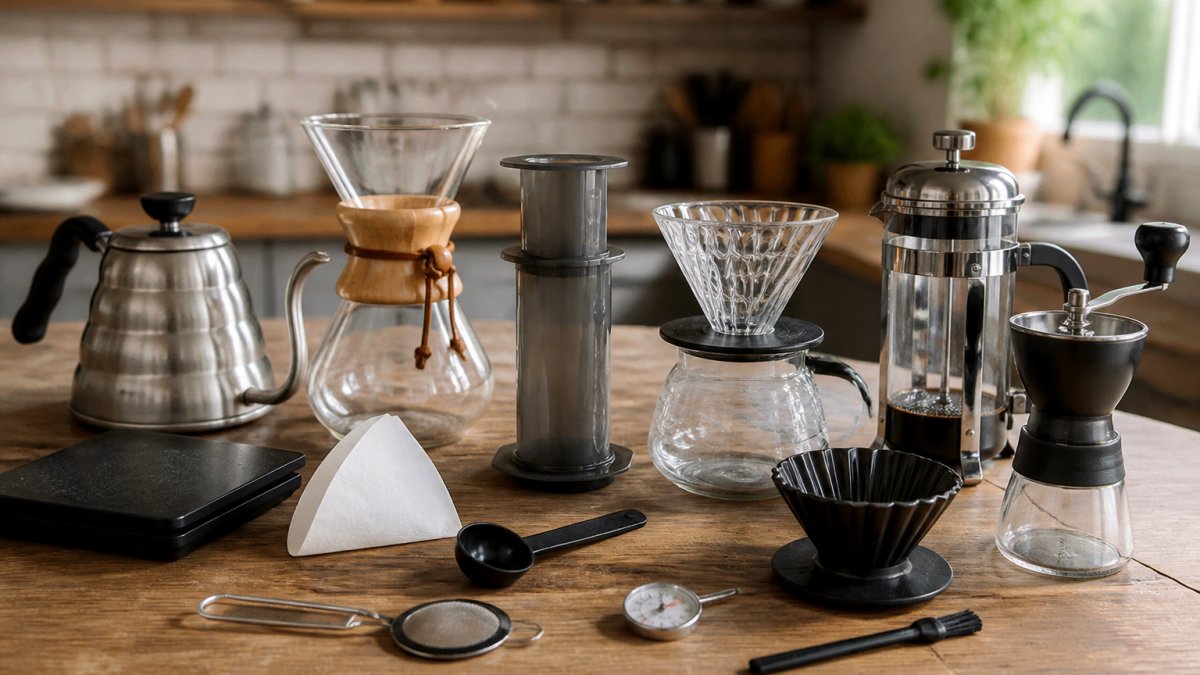
Pour-over coffee tools are a dripper, the right paper filter, and a gooseneck kettle. That trio gives you control over pour rate and water temperature, which is what separates a bright, clean cup from a muddy one.
The gooseneck spout matters more than beginners expect. A slow, steady pour keeps the bed of coffee grounds even, so water passes through at a consistent rate. A standard kettle dumps water in surges and channels through the bed.
Paper filters also shape the result. Bleached and unbleached filters behave slightly differently, and rinsing the filter first removes papery notes while warming the dripper.
Temperature control is the other lever. Water that is too hot scorches delicate flavours; too cool and you under-extract. A kettle with a thermometer or preset temperatures removes the guesswork.
Essential Espresso Accessories: Tampers, Puck Prep and Milk Pitchers
Espresso accessories are where home setups quietly succeed or fail. A tamper that fits your portafilter basket properly compresses the coffee puck evenly. An ill-fitting tamper leaves uneven density, and water finds the path of least resistance.
Puck preparation tools have moved from niche to standard. WDT tools, which break up clumps in the basket, and puck screens are increasingly cited as essential for improving water flow and keeping the machine cleaner, according to Subminimal's 2026 equipment guidance. A distribution tool or a simple WDT needle tool costs little and addresses the most common cause of channelling, clumps and uneven density before tamping.
Dialling in espresso is a calibration routine, not a one-off setting. A common pattern is to fix the dose first (often 18 g in a double basket), then adjust grind until a shot runs in roughly 25-30 seconds, then adjust yield to taste. Change one variable at a time and taste between adjustments.
Then there is milk. A milk pitcher with a good spout shape lets you control texture, and a thermometer helps you stop before the milk scalds. Silky microfoam comes from technique, but the pitcher makes technique possible.
A knock box and a cleaning brush round out the kit. Both are unglamorous and both get used every single day. Backflushing with a suitable cleaner and brushing the group head gasket weekly prevents the build-up that dulls flavour and shortens machine life. Replace gaskets when they harden or leak, and descale on the schedule your machine's water hardness demands.
Coffee Scales, Water and Storage: The Quiet Tools That Decide Brew Quality
A digital coffee scale is the cheapest upgrade with the biggest effect. Precision dosing lets you follow a brew ratio and repeat it. A recommended coffee-to-water ratio sits between 1:15 and 1:17, according to Justin Coffee Group's 2026 brewing guidance, and you cannot hit that reliably by eye.
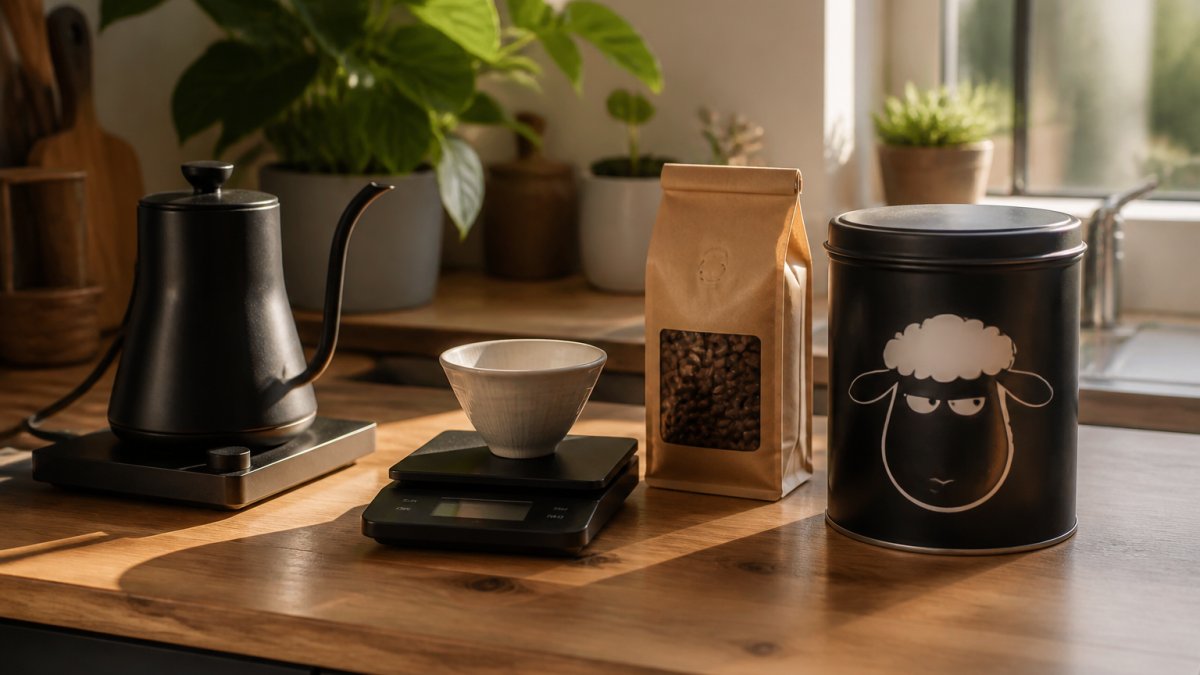
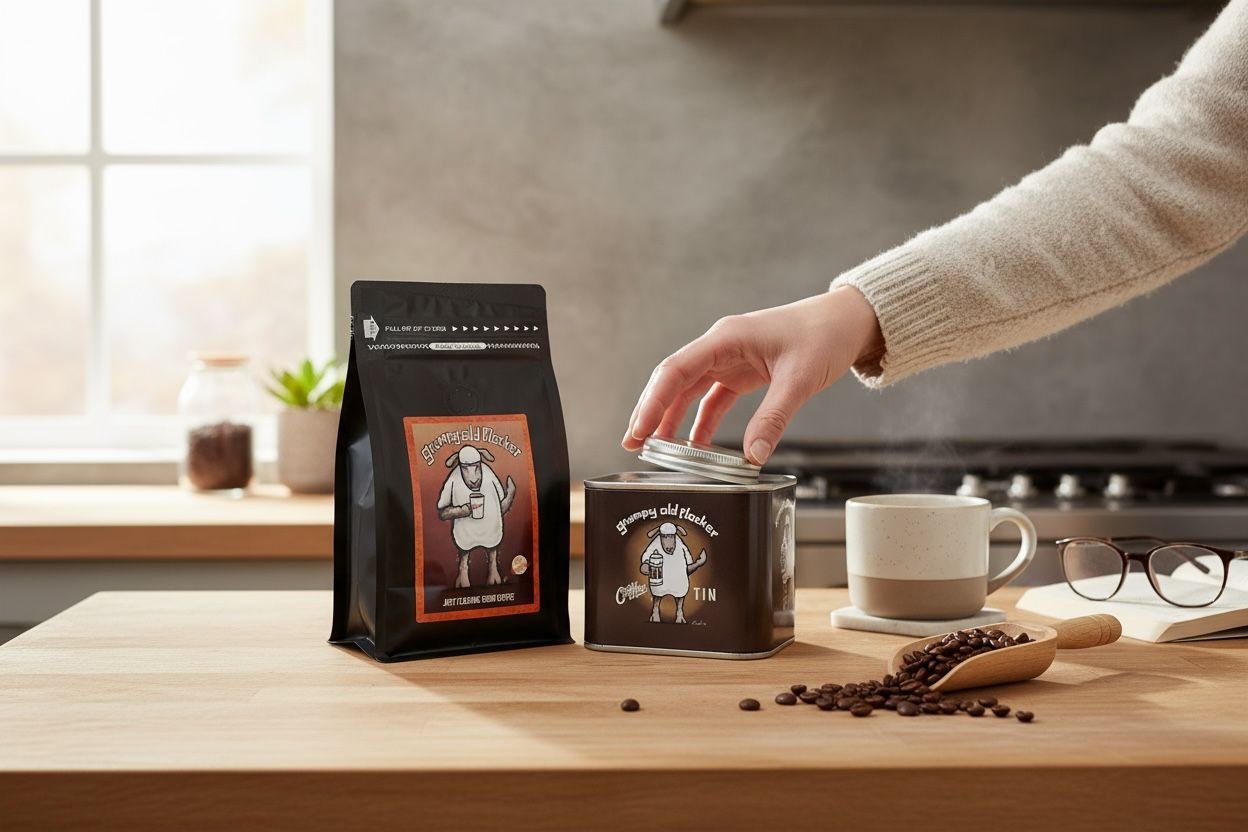
Funny Coffee Storage Tins | Airtight Coffee Canisters | Baaad Flockers® →
Water quality is the tool nobody lists. Filtered water reduces chlorine and scale, and it protects both flavour and your machine. If your kettle furs up, your coffee is tasting that too.
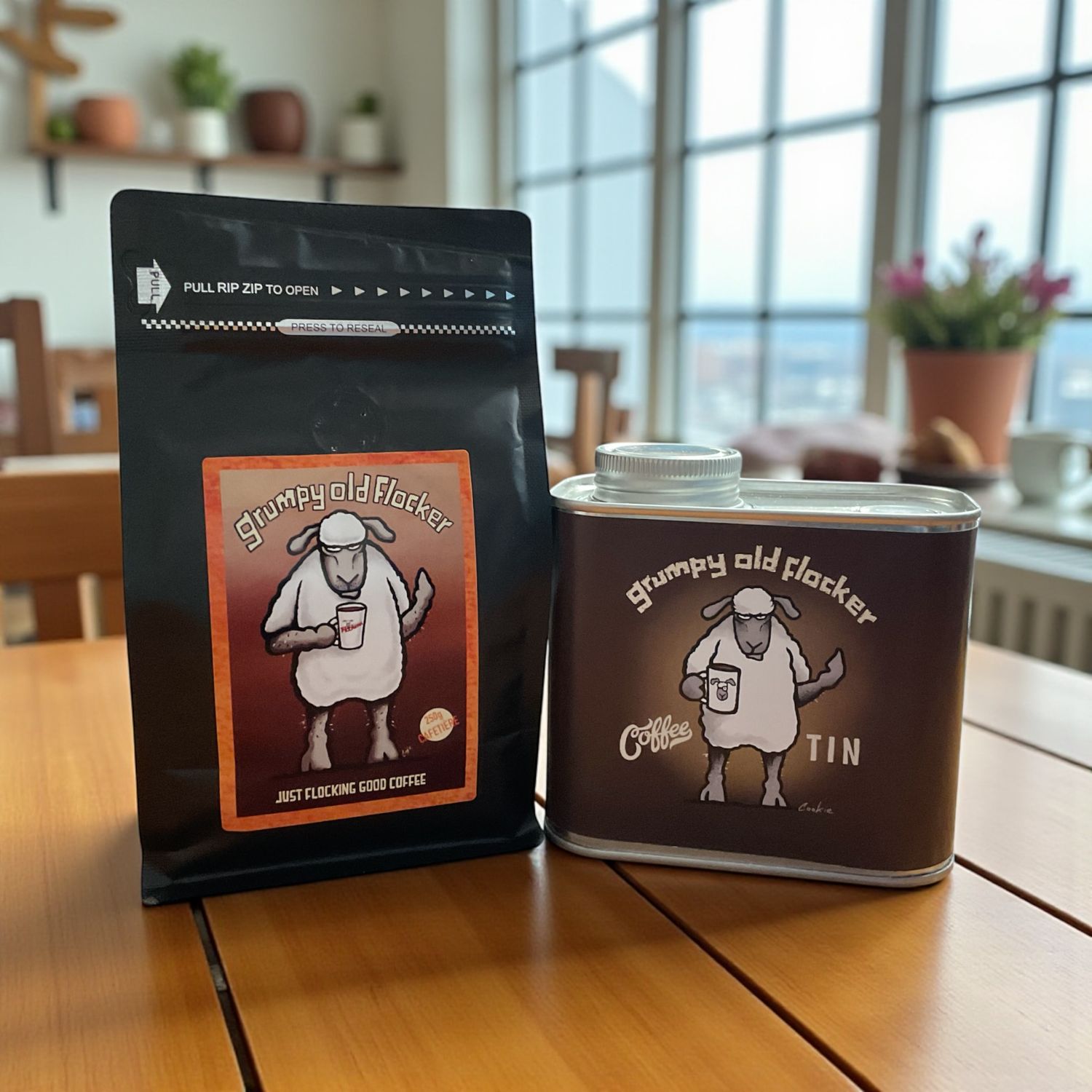
Storage closes the loop. Beans stale quickly once opened, so an airtight container earns its place. Our funny airtight coffee storage tins come in small, medium and large and suit beans, ground coffee or instant.
Choosing Tools by Brewing Method and Counter Space
Match the tool to the method before you match it to the trend.
| Brewing method | Core tools | Grind size | Counter space |
|---|---|---|---|
| Pour-over | Dripper, filter, gooseneck kettle, scale | Medium | Small |
| French press | Cafetière, kettle, scale, coarse grinder | Coarse | Small |
| Espresso | Machine, burr grinder, tamper, pitcher | Fine | Large |
| Filter machine | Machine, filter, scale, grinder | Medium | Medium |
Counter space is the constraint people forget. An espresso setup needs room for the machine, grinder, tamping mat and knock box, plus clearance above for filling the water tank. A pour-over corner fits on a single tray.
Compatibility matters too. Check that your tamper matches your basket diameter and that your grinder can actually reach espresso fineness before you buy the machine.
A Tiered Toolkit by Budget and Experience Level
Build in tiers rather than buying everything at once. The tier that suits you depends on how you brew and how often, not on how much you can spend in one go.
- Starter: burr grinder, digital scale, dripper or cafetière, kettle, fresh beans. This covers grind, dose, temperature and filtration, the four variables that decide cup quality. A hand grinder with conical burrs and a basic dripper will outperform a cheap blade grinder and an expensive machine.
- Intermediate: add a gooseneck kettle with temperature control, a better grinder, and airtight storage. This is the tier where repeatability improves: preset temperatures, a scale with a timer, and a grinder with stepped or stepless adjustment let you dial in and repeat a recipe.
- Advanced: espresso machine, precision tamper, WDT tool, puck screen, milk pitcher, knock box. Add these only when the method you brew most often demands them, and check compatibility first, basket diameter, portafilter size and whether your grinder can reach espresso fineness.
Precision brewing tools are in rising demand as gifts, with temperature-controlled kettles, digital scales and precision grinders topping home-barista wish lists, according to Dioro's 2026 gifting trends.
Not every gadget earns its place, though. Some experienced brewers argue you can reach excellent results with five simple tools and skip the fancy extras entirely, as @roastingparty notes on Instagram points out. A useful test before any purchase: does this tool solve a problem I can taste or measure? If not, it can wait.
Maintenance and replacement belong in the plan, not the afterthought. Burrs dull over time and produce more fines and less clarity; replace them when grind times lengthen or flavour flattens. Paper filters are consumables, gaskets harden, and descaling frequency depends on your water hardness. Budget for these as running costs rather than one-off purchases.
Counter space is the other constraint. An espresso setup needs room for the machine, grinder, tamping mat and knock box, plus clearance above for filling the water tank. A pour-over corner fits on a single tray. Measure the space before you buy, and favour tools that do more than one job where you can.
Start with the tier that matches how you actually brew, then upgrade the item that limits you most. A grinder upgrade usually improves every method; a machine upgrade only improves espresso.
Conclusion
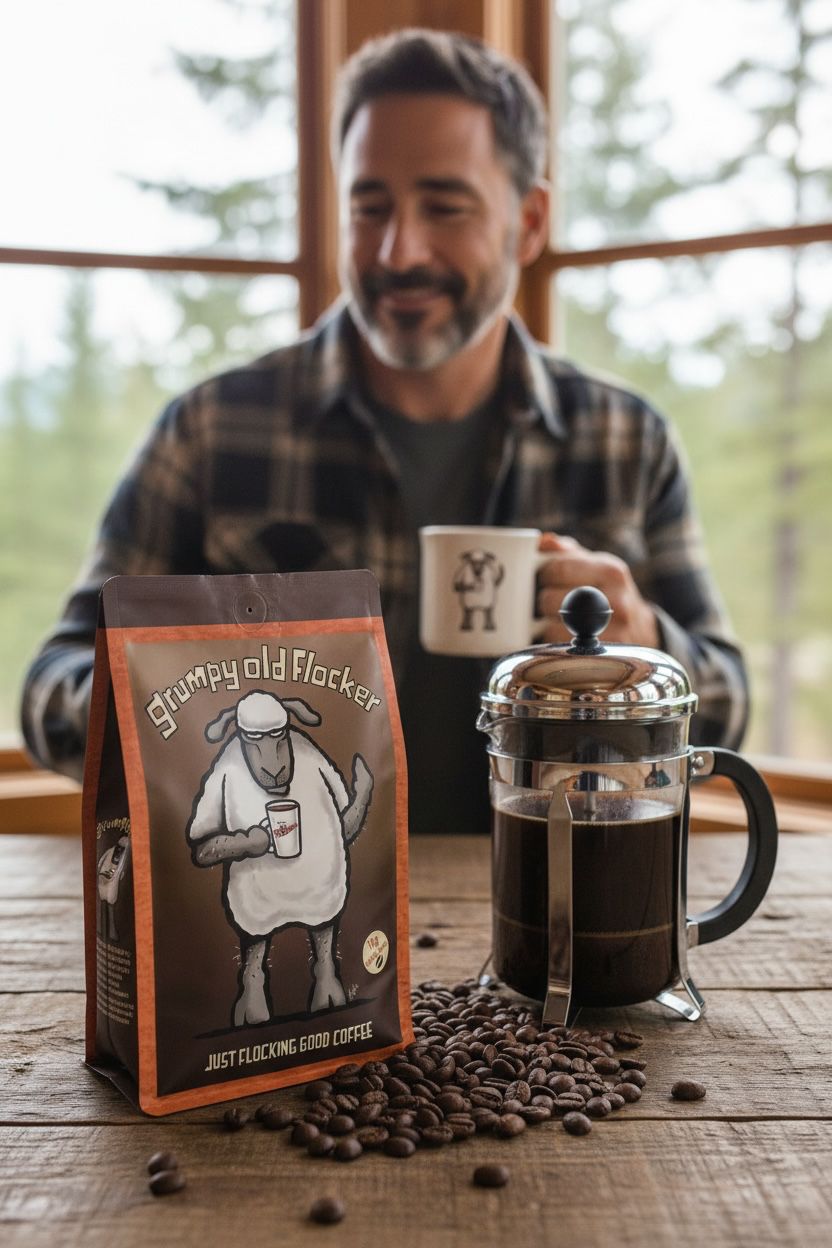
The hardest part of building a home coffee bar is not buying gear, it is resisting the urge to buy all of it at once. Start with a grinder, a scale and one brewing method you enjoy, then add only what solves a real problem. Our Grumpy Old Flocker coffee beans and cafetière ground coffee give you fresh coffee to practise with. Explore the range and build a setup that makes you smile before the caffeine even lands.
Frequently Asked Questions
What equipment does a home barista need to start?
Start with five items: fresh coffee, a burr grinder, a digital scale, a kettle and a brewing device such as a pour-over dripper or cafetière. The grinder matters most because grind consistency affects extraction more than any other tool. A scale keeps your brew ratio repeatable; aim for roughly 1:15 to 1:17 coffee to water. Add a thermometer if your kettle lacks temperature control. Everything else, including espresso machines, milk pitchers and puck-prep tools, can wait until your basics are dialled in.
Is a coffee grinder essential for home brewing?
Yes, if you want consistent results. Pre-ground coffee loses aroma quickly and locks you into one grind size, so you cannot adjust for a cafetière versus a pour-over. A burr grinder gives you even particles and lets you change grind size as beans age. Hand burr grinders suit small kitchens and low volumes; electric burr grinders save time for daily brewing. Blade grinders chop unevenly and produce fines that clog filters, so skip them unless budget is the only constraint.
Do home baristas really need a coffee scale?
A digital scale is one of the cheapest upgrades with the biggest effect. It lets you weigh doses and water instead of guessing, which makes your brew ratio repeatable and your results consistent. Without a scale, a slightly different scoop of coffee each morning changes extraction and taste. Look for a scale reading to 0.1g with a built-in timer, and keep it dry. For espresso, a scale that fits under the cup on the drip tray helps with precision dosing.
Can you make good coffee at home without an espresso machine?
Yes. A pour-over dripper, cafetière or Aeropress with a decent grinder, scale and temperature-controlled kettle produces excellent coffee without the cost or counter space of an espresso machine. Espresso concentrates effort into puck preparation, tamping and machine maintenance, and it costs more to do well. If you drink milk-based drinks daily, an espresso machine earns its place. If you mostly drink black coffee, spend your budget on the grinder and kettle instead.
What is the difference between essential and optional coffee equipment?
Essential tools change the outcome of every brew: grinder, scale, kettle and a brewing device. Optional tools make a specific style easier or more repeatable, such as a gooseneck spout for pour-over, a tamper and puck screen for espresso, or a milk pitcher for frothing. Buy essentials first, then add accessories for the method you actually use. Storage, cleaning brushes and a knock box sit in the useful-but-not-urgent category. Upgrade only when a tool solves a problem you can taste.