 listicle
Funny Sweaters That Actually Last: A Guide to Sustainable Style
Last Updated: October 25, 2026
Quick Summary
Eco friendly funny sweaters combine lower-impact materials like organic cotton or recycled polyester with hand-drawn designs and ethical production practices. The best sustainable funny sweater is one you'll actually wear repeatedly, which means it must make you smile while being built to last years, not months.
- Organic cotton production uses roughly 91% less water than conventional cotton
- Verify fibre claims against named certifications like GOTS, GRS, or RWS on the label
- Ask brands three questions before buying: where was it made, which factory, and what worker welfare standard applies
- Hand-drawn designs printed with eco inks withstand years of wear better than mass-produced graphics that fade or crack
- A sweater you genuinely love gets worn repeatedly, which is where real sustainability happens
Table of Contents
- Why Eco Friendly Funny Sweaters Matter More Than You Think
- What Makes a Sweater Genuinely Sustainable
- Organic Cotton Sweaters and Other Lower-Impact Materials
- Ethical Knitwear Brands That Back Up Their Claims
- How to Choose Sustainable Clothing Without Sacrificing Humour
- Quality Over Trends: Why Hand-Drawn Design and Durability Win
- Finding Your Perfect Funny Sweater That Lasts
- Frequently Asked Questions
Why Eco Friendly Funny Sweaters Matter More Than You Think
Sustainable fashion design practices are increasingly focused on satisfying customers' emotions and personal tastes, not just environmental credentials. This shift matters because it means you don't have to choose between wearing something genuinely funny and making a responsible purchase. Research from Frontiers in Psychology examined sustainable fashion design practices intended to satisfy customers' emotions and personal tastes, highlighting the relevance of designing sustainable clothing around individual preferences.
At Baaaad Flockers, we believe the best sustainable sweater is one you'll actually wear. A sweater that sits in your wardrobe unworn is waste, no matter how eco-friendly its materials. When a funny, hand-drawn design makes you smile every time you put it on, you're more likely to wear it for years. That longevity is where real sustainability happens.
The eco friendly funny sweaters market has shifted. You no longer have to settle for either a sustainable piece that looks boring or a hilarious design made from questionable materials. Below, we'll show you how to find funny sweaters that last, backed by materials and production practices you can verify.
What Makes a Sweater Genuinely Sustainable
A genuinely sustainable sweater combines three elements: lower-impact materials, ethical production, and durability that justifies keeping the garment for years.
Material sourcing matters most. Natural fibres like organic cotton, merino wool, and alpaca wool require fewer chemical inputs than conventional alternatives, and recycled polyester reduces demand for virgin resources. Organic cotton production uses roughly 91% less water than conventional cotton, according to industry standards.
Production practices matter equally. Ethical knitwear brands operate transparent supply chains, disclosing where garments are made, who makes them, and under what conditions. When a brand publishes factory locations and worker standards, you can verify its claims.
Durability is the overlooked pillar. A sweater made from sustainable materials but engineered to fall apart after one season is a sustainability failure. Quality construction, reinforced seams, and timeless design keep the garment in rotation for years, multiplying the environmental benefit of the original material choice.
Organic Cotton Sweaters and Other Lower-Impact Materials
Organic cotton sweaters form the foundation of sustainable knitwear. Shop the Skeleton Crew Pirate Kid's Hoodie to see a real example of an eco-friendly sweater made with sustainable materials and hand-drawn design. Grown without synthetic pesticides or fertilisers, organic cotton reduces chemical runoff and supports healthier soil, and the fibre is softer and more durable than you might expect.
Merino wool and alpaca wool regulate temperature and resist odours naturally, meaning fewer washes and longer garment life. They're biodegradable, unlike synthetics that persist in landfills for decades.
Recycled polyester diverts plastic waste from landfills and reduces demand for new petroleum extraction, carrying lower embodied carbon than virgin synthetics.
Sustainability journal research from researchers Y. Kim and colleagues examined sustainable fashion's core value through literature review and expert interviews, confirming that material sourcing underpins genuine sustainability claims.
The real test is whether the brand names its materials and sources. Vague language like "eco-friendly blend" masks uncertainty. Specific claims, "100% organic cotton" or "30% recycled polyester", signal confidence.
How to verify fibre claims
A label is a starting point, not proof.
Care, repair and end-of-life
Material choice is only part of the impact story. How you wash, repair and eventually dispose of a sweater determines whether the lower-impact material actually delivers a lower-impact garment.
Washing at 30°C or lower and air-drying reduces energy use and fibre shedding. Wash less often, spot-clean between washes, and for wool use a wool cycle with pH-neutral detergent to preserve fibre structure.
Repair matters more than most shoppers expect.
Ethical Knitwear Brands That Back Up Their Claims
Ethical knitwear brands distinguish themselves through verifiable practices, not marketing slogans alone. The gap most roundups leave open is how to actually check those practices, so this section focuses on the evidence you can request and the UK bodies that regulate claims.
Transparency you can test
Transparency is the first signal. Brands that publish factory locations, worker standards, and production timelines invite scrutiny. When a brand hides its supply chain, assume the worst; when it publishes details, you can assess whether those practices align with your values.
A practical test is to ask three questions before buying: Where was the garment made? Which factory, and in which country? What standard applies to worker welfare at that site? A brand that can answer all three is operating at a different level from one that replies with a general statement about "ethical partners".
Certifications that mean something in the UK
In the UK, environmental and ethical claims are also governed by consumer protection law. The Competition and Markets Authority (CMA) enforces rules against misleading environmental claims, and its Green Claims Code sets out that claims must be truthful, clear, not omit relevant information, and backed by evidence (Making green claims: Getting it right, across the supply chain). A brand that cannot substantiate a claim like "carbon neutral" or "sustainably made" is exposed to regulatory action, and you can report concerns to the CMA. This is a useful lever: ask for the evidence behind a claim, and if none is forthcoming, treat the claim as marketing.
Bad To The Bone Crew Neck Sweater | Funny Motorcycle Dog Sweatshirt | Baaad →
Small-batch production and worker evidence
Small-batch production often signals ethical practice. Smaller runs reduce waste and allow closer quality control, contrasting sharply with fast-fashion volume, where quantity trumps quality and accountability.
Worker evidence is harder to verify than material claims, so ask for specifics: published factory audits, membership of a recognised auditing scheme, or a supplier code of conduct with named factories.
Customer feedback as evidence
Real customer feedback reveals truth. Customers who have worn a brand's sweaters for years and continue buying offer stronger evidence than marketing claims. At Baaaad Flockers, we hear repeatedly that quality is "100% on all products" and that customers are "getting quite a collection now." That repeat purchasing behaviour signals durability and design appeal that justify the initial investment.
How to Choose Sustainable Clothing Without Sacrificing Humour
The tension between sustainability and personality is false. You can evaluate funny sweaters using the same rigour you'd apply to any sustainable purchase.
Start with material. If the material is unlisted or vague, move on.
Next, assess construction. Reinforced seams at stress points (shoulders, underarms) predict longevity. A sweater built to last five years, not five months, is genuinely sustainable.
Then verify the brand. Can you find factory information, worker standards, or production locations? Do customer reviews mention durability and fit consistency? These details separate brands that mean it from brands that are marketing.
Finally, ask whether you'll actually wear it. A funny sweater you genuinely love gets worn repeatedly. That repetition is where sustainability lives. If the design makes you laugh or feel confident, you've found the right piece.
Quality Over Trends: Why Hand-Drawn Design and Durability Win
Hand-drawn design and durability are inseparable from genuine quality. Mass-produced graphics fade, crack, or peel after a few washes, while hand-drawn artwork printed with eco inks withstands years of wear because the design is part of the garment, not layered on top.
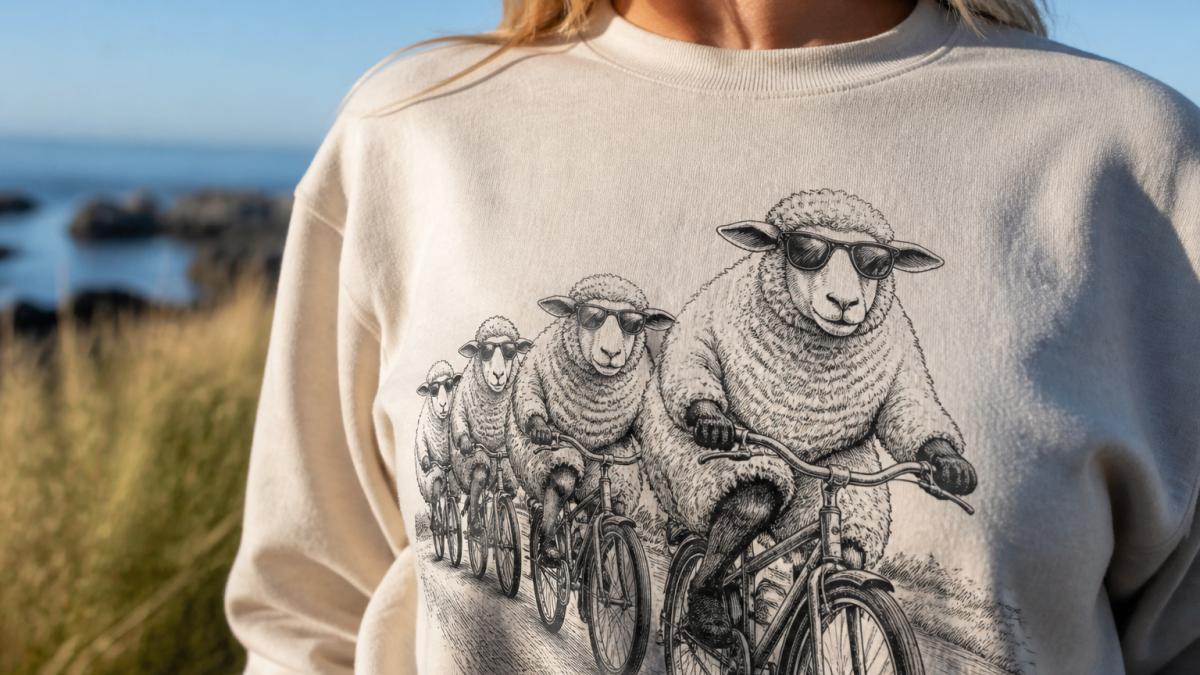
Durability compounds the sustainability argument. A sweater that survives 100 washes is genuinely lower-impact than a cheaper alternative you replace after 20. A designer with over 30 years of creating bestselling pieces understands how to balance aesthetic appeal with construction durability.
Hand-drawn designs also create emotional attachment. A funny sweater with original artwork is memorable and personal. You're more likely to wear it repeatedly, care for it properly, and keep it for years. That attachment is the hidden engine of sustainability, a garment loved is a garment worn.
Finding Your Perfect Funny Sweater That Lasts
Choosing the right funny sweater means matching three elements: your sense of humour, your lifestyle, and your sustainability priorities.
Start by identifying what makes you laugh. Do you prefer retro-inspired designs, rebellious humour, or playful animal characters? Your sense of humour is personal. A sweater that resonates with your taste will be worn. A sweater chosen for someone else's sense of humour often sits unworn.
Consider your lifestyle. A sweater for casual home wear has different durability demands than one for regular office wear. Match the design and material to how you'll actually wear it.
Then verify the sustainability claims. Discover the Perfectly Chilled® Kimmer T-Shirt to find a specific funny sweater product that combines sustainability with humour and longevity. Material, production transparency, and durability form the foundation, and customer feedback confirms whether claims hold up in practice.
A practical framework: evaluate any funny sweater against these criteria:
| Criterion | What to Check | Why It Matters |
|---|---|---|
| Material | Organic cotton, recycled fibres, or natural wool | Lower environmental impact and durability |
| Construction | Reinforced seams, quality hems, durable print | Longevity and performance over time |
| Brand Transparency | Factory locations, worker standards, certifications | Accountability and verifiable ethics |
| Design Appeal | Genuinely funny to you, not trendy or dated | Repeated wear increases sustainability benefit |
| Sizing & Fit | Detailed size guides, easy returns | Right fit means the sweater gets worn |
This framework applies whether you're buying for yourself or choosing a gift. A funny sweater that actually fits and genuinely makes the wearer laugh is a gift that gets worn for years.
Finding eco friendly funny sweaters that last requires balancing humour with durability and material responsibility. The best sustainable sweater is one you'll wear repeatedly, which means it has to make you smile and feel good to wear. Start with material and construction, verify the brand's transparency, and choose a design that genuinely resonates with you. That combination, real materials, verifiable ethics, quality design, and authentic humour, is where sustainability and personality meet.
Frequently Asked Questions
What makes eco friendly funny sweaters different from regular graphic tees?
Eco friendly funny sweaters prioritise both humour and environmental responsibility. They combine original, hand-drawn designs with sustainable materials, and are produced by brands committed to ethical manufacturing. Unlike fast-fashion alternatives, quality funny sweaters are built to last, reducing the need for frequent replacement and the environmental cost that brings.
How do I know if an ethical knitwear brand is genuinely sustainable?
Look for details about material sourcing. Genuine ethical knitwear brands disclose where and how their garments are made, specify fibre content, and explain their production practices. Brands with decades of design experience and a track record of best-selling pieces often prioritise durability and quality over volume, which is a strong indicator of authentic sustainability commitment.
What's the best material for an eco-friendly funny sweater that will actually hold up?
The key is checking the fibre-content label and choosing brands that specify their sourcing. A well-made sweater from quality materials will resist shrinking and print cracking far better than mass-produced alternatives.
Can funny sweaters really be funny without being immature or cringey?
Yes, humour that lands comes from clever design and genuine wit, not shock value. Hand-drawn artwork by experienced designers creates designs that feel intentional and well-crafted rather than trying too hard. Designs that reference shared cultural moments, playful wordplay, or absurdist scenarios tend to age well and feel comfortable to wear repeatedly. Customer feedback consistently shows that genuinely funny designs spark conversations and compliments rather than awkwardness, especially when paired with quality construction and a rebellious but approachable brand voice.