 blog
blog
8 Best Artistic Statement Clothing Brands
Table of Contents
- What Defines Artistic Statement Clothing Brands
- The Appeal of Wearable Art and Self-Expression Through Fashion
- How to Wash Graphic Tees Without Cracking
- Styling Statement Graphic Sweaters for Everyday Wear
- Sustainability and Ethical Production in Independent Labels
- Why Hand-Drawn Designs Matter in Artistic Fashion
- Finding Your Perfect Fit: Sizing and Quality Standards
- Conclusion
- Frequently Asked Questions
Last Updated: September 29, 2026
What Defines Artistic Statement Clothing Brands
Artistic statement clothing brands are those that prioritise original design, hand-crafted aesthetics, and bold self-expression over mass-market conformity. These labels reject generic templates in favour of unique motifs, vibrant palettes, and wearable art that tells a story. At Baaaad Flockers, we create pieces that spark conversation and genuine laughter without crossing into vulgarity.
What separates true artistic statement clothing brands from fast-fashion alternatives is the depth of creative vision behind each piece. Rather than chasing trends, these brands establish their own visual language. Hand-drawn designs, limited-edition runs, and thoughtful construction define the category. The result is clothing that functions as both comfort and identity marker, garments people actually want to wear repeatedly, not discard after a season.
The appeal runs deeper than aesthetics. When you wear something genuinely funny or visually striking, you're communicating something about yourself without saying a word. That's the power of statement pieces done right.
The Appeal of Wearable Art and Self-Expression Through Fashion
Fashion has always been a form of self-expression, but artistic statement clothing takes this further. Instead of following what influencers dictate, you're choosing pieces that genuinely reflect your personality and sense of humour. A well-designed graphic tee isn't just clothing, it's a conversation starter, a mood setter, a small rebellion against the beige uniformity of everyday wear.
The psychology here is straightforward: people gravitate toward brands that feel authentic to who they are. When independent designers create from genuine creative impulse rather than market research algorithms, that authenticity shines through. Customers sense the difference between something made with care and something manufactured purely for profit. That distinction matters, especially when you're paying a premium for quality.
Wearable art also solves a real problem in modern wardrobes. Most people own dozens of plain basics that serve a function but inspire nothing. Adding statement pieces creates visual interest without requiring a complete style overhaul. A single bold sweater or cleverly designed tee can elevate an entire outfit. For those who appreciate effortless style without sacrificing personality, this approach works.
How to Wash Graphic Tees Without Cracking
The biggest complaint about graphic tees, whether from independent designers or mass producers, is that prints crack, fade, or peel after a handful of washes. This happens because most people wash them incorrectly. Here's how to keep your designs looking sharp.
Turn your tees inside out before washing. This single step protects the printed surface from direct friction and agitation. Wash in cold water only, hot water breaks down both fabric fibres and ink adhesion. Use a gentle cycle, never a heavy-duty wash. Avoid bleach and oxygen-based cleaners, which fade designs rapidly.
Skip the dryer entirely. Machine drying is the primary culprit behind cracking. Heat weakens ink bonds and shrinks fabric unpredictably. Instead, hang your tees to air dry in indirect sunlight. This takes longer but preserves both the print and the garment's shape. If you must use a dryer, use the lowest heat setting and remove items promptly.
When it comes to detergent, less is more. Use half the recommended amount, excess soap residue can degrade print quality over time. For graphic tees with hand-drawn designs especially, treat them like you'd treat a delicate piece of art. Because fundamentally, that's what they are.
Styling Statement Graphic Sweaters for Everyday Wear
The concern most people have about bold graphic sweaters is whether they'll look too loud or try-hard in everyday situations. The answer: it depends entirely on how you style them.
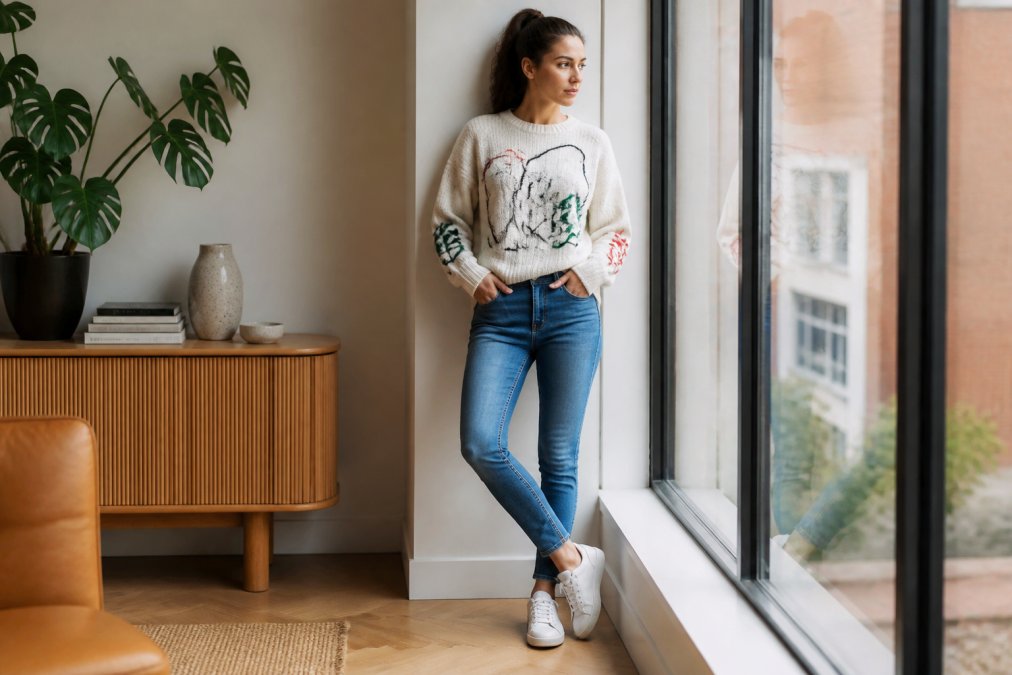
A statement sweater works best when paired with understated basics. Wear it with plain jeans (black, navy, or grey work universally), neutral trainers, and minimal accessories. This approach lets the design breathe without competing with other visual noise. The sweater becomes the focal point, which is exactly what you want.
For work or more formal settings, layer your statement piece strategically. A graphic sweater under a plain blazer or oversized cardigan tones down the visual impact while keeping the personality intact. You get the creative boost without looking unprofessional. This works particularly well for remote work or creative industries where personality is welcomed.
The key is confidence. Wear your statement sweater like you genuinely like it, because hesitance reads louder than any design ever could. People respond to authenticity. When you're comfortable in what you're wearing, others relax around it too. That's when the humour lands, the design gets noticed, and the compliments start arriving.
Sustainability and Ethical Production in Independent Labels
Independent artistic brands operate under fundamentally different economic constraints than mass manufacturers, and understanding those constraints explains both their higher prices and their genuine sustainability advantages.
Small-batch production is the foundation. A mass manufacturer might produce 50,000 units of a single design, betting on volume to absorb waste and overstock. An independent label produces 200-2,000 units per design. This difference has cascading effects. Overproduction waste drops dramatically. Unsold inventory doesn't languish in warehouses or end up in landfills. Inventory turnover accelerates, meaning capital isn't tied up in dead stock. For the consumer, this means designs remain available longer (because they actually sell) but also that each piece is genuinely limited.
Material sourcing reflects this scale too. Independent makers often source certified organic cotton, recycled polyester, or linen from suppliers who specialise in smaller orders. These suppliers typically charge 15-25% premiums over conventional bulk suppliers, but they offer transparency: you can often trace fabric back to the mill, sometimes to the farm. Mass manufacturers avoid this because the premium doesn't scale. An independent brand absorbs the cost; a mass manufacturer would lose margin.
Ethical production requires direct relationships. Most independent labels work with manufacturers they know personally, often regional or domestic producers rather than offshore facilities. This proximity enables oversight. A designer can visit the factory, meet the production team, and verify conditions directly. Fair wages follow naturally because the relationship is personal, not transactional. There's no race-to-the-bottom pricing that forces wage compression. A typical independent brand pays 20-40% more per unit than mass manufacturers, but that cost is distributed across a smaller production run, so the retail price increase is proportional rather than punitive.
Transparency is the practical filter. Legitimate independent brands publish production information without hesitation: fabric content and origin, manufacturing location, certifications (GOTS for organic cotton, Fair Trade, B Corp status), and often the names of key suppliers. Ask directly: Where is this made? Who made it? What's the fabric? Brands that answer with specifics, "Manufactured in [location] by [facility name], GOTS-certified organic cotton from [supplier]", are worth trusting. Brands that offer vague assurances ("ethically made", "sustainably sourced" without detail) are often obscuring something.
Cost breakdown helps contextualise pricing. A £45 artistic statement tee from an independent maker might break down roughly as: fabric and printing (£8-12), labour and overhead (£6-10), packaging and shipping (£2-3), retailer margin or direct-to-consumer costs (£8-12), and profit (£8-12).
Why Hand-Drawn Designs Matter in Artistic Fashion
Hand-drawn designs carry intentionality that algorithmic or template-based work cannot replicate. But the real distinction lies in how these designs interact with garment production and longevity, a technical story most fashion writing overlooks.
Finding Your Perfect Fit: Sizing and Quality Standards
Online clothing is genuinely a gamble if you don't know what to look for. Sizing varies wildly between brands, and returns can be frustrating. Here's what separates reliable independent labels from those that disappoint.
| Quality Indicator | What to Look For | Why It Matters |
|---|---|---|
| Fabric Weight | 180-220 gsm minimum | Heavier fabric resists shrinkage and lasts longer |
| Seam Construction | Double-stitched throughout | Single stitches fail; double stitches hold through years of wear |
| Hem Finishing | Reinforced, even stitching | Prevents unravelling and maintains garment shape |
| Collar Band | Rib-knit or reinforced | Prevents stretching and maintains neckline integrity |
| Return Policy | Free returns, no restocking fees | Indicates brand confidence in sizing and quality |
Conclusion
Artistic statement clothing brands exist because people want more from their wardrobes than function and trend-chasing. You want pieces that make you smile, reflect your personality, and last through countless washes without falling apart. Finding brands that deliver all three, genuine design, quality construction, and ethical production, genuinely matters.
Frequently Asked Questions
What defines an artistic statement clothing brand?
Artistic statement clothing brands prioritise self-expression through unique, often hand-drawn designs that function as wearable art. They blend fine art principles with garment construction, focusing on limited-edition pieces, bespoke aesthetics, and creative vision rather than mass-market trends. These brands often emphasise the designer's individual philosophy and craftsmanship, making each piece tell a visual story.
How do I know if statement clothing will actually hold up after washing?
Quality artistic statement clothing uses durable printing methods like direct-to-garment or screen printing on premium fabrics. Look for brands with proven track records, those with 30+ years of design experience, detailed care instructions, and customer testimonials about longevity. Always follow washing guidelines: cold water, inside-out washing, and gentle drying preserve prints far longer than high-heat cycles.
Can I wear artistic statement pieces without looking overdone?
Yes. Pair bold graphic sweaters and tees with neutral basics, plain jeans, simple trousers, or minimalist trainers, to let the design breathe. Layer statement pieces under jackets or cardigans for a more understated vibe. The key is treating the garment as the focal point rather than adding competing visual elements. Capsule wardrobes work best with statement pieces because they're versatile enough for everyday wear.
Are independent artistic clothing brands genuinely more sustainable?
Many independent labels prioritise ethical manufacturing and small-batch production, reducing waste compared to mass-market alternatives. However, sustainability varies by brand. Look for those using organic or recycled fabrics, transparent supply chains, and fair-trade practices. Hand-crafted and limited-edition production naturally aligns with slow fashion principles, though individual brands differ in their environmental commitments.