 listicle
Premium Coffee Beans for Home Brewing: 2026 Review
Table of Contents
- How to Choose Premium Coffee Beans for Home Brewing
- Roast Profiles: Light, Medium, and Dark
- The Importance of Roast Date and Freshness
- Single Origin vs Blend Coffee Beans: Which Suits Your Brew?
- Coffee Bean Grind Size Guide for Home Brewing
- How to Store Coffee Beans for Freshness
- Our Top Pick: Grumpy Old Flocker Coffee Beans
- Troubleshooting Extraction and Water Chemistry
- Frequently Asked Questions
Last Updated: September 10, 2026
How to Choose Premium Coffee Beans for Home Brewing
Premium coffee beans for home brewing are speciality-grade beans, typically scoring 80+ on the SCA scale, chosen for freshness, traceable origin, and a roast profile that matches your brewing method. At Baaaad Flockers, we know how to make you laugh! We've learned that great coffee, like a great t-shirt, comes down to quality you can taste and a bit of personality. Below, we'll show you exactly how to pick beans that suit your setup, and where most buyers go wrong.
The single biggest mistake home brewers make is chasing roast date while ignoring grind size and water. Get those three aligned and even a modest bag tastes excellent.
Roast Profiles: Light, Medium, and Dark
Roast profile is the single biggest flavour decision you make before you even open the bag. It determines how much of the bean's origin character survives the roaster, and it dictates which brewing methods will flatter the coffee rather than fight it.
What Actually Happens During a Roast
Green coffee is dense, grassy, and full of stored sugars and acids. As the roaster applies heat, the bean goes through three broad phases: drying, Maillard reaction (browning, where most of the sweetness and body compounds form), and development (first crack onwards, where acidity drops and roast-derived flavours take over). The longer and hotter the development phase, the more the origin character is muted and the more the roast itself, caramel, cocoa, smoke, sits in the cup.
A useful mental model: roast level is a dial that trades origin clarity for roast-derived comfort. Neither end is "better"; they solve different problems.
Light Roasts
Light roasts are typically dropped shortly after first crack, before second crack begins. They retain the most chlorogenic acids and volatile fruit/floral compounds, which is why they taste bright, tea-like, and sometimes sharply acidic. They are also the least forgiving: under-developed light roasts taste grassy or bready, and over-extracted light roasts taste sour and thin.
- Best for: pour-over (V60, Chemex), filter, Aeropress at lower temperatures
- Watch out for: high-altitude African beans (Ethiopia, Kenya) can be stunning light; low-grown Brazilians often taste hollow
- Brew tip: use water a few degrees cooler than you would for a dark roast, and grind slightly finer to compensate for the denser bean structure
Medium Roasts
Medium roasts sit between first and second crack. They balance origin acidity with caramelised sweetness and a rounder body, which is why they are the default for most speciality roasters and the safest choice for a home brewer juggling several devices.
- Best for: almost everything, cafetière, filter, pour-over, espresso, Aeropress
- Flavour signature: milk chocolate, stone fruit, brown sugar, mild citrus
- Brew tip: this is the profile to buy first if you are unsure; it tolerates a wider range of grind and temperature errors
Dark Roasts
Dark roasts push into or past second crack. The bean's internal structure becomes porous and oily, sugars are heavily caramelised, and origin character is largely replaced by roast-derived notes: dark chocolate, molasses, toasted nuts, and sometimes smoke or ash.
- Best for: espresso, moka pot, cafetière, milk-based drinks
- Why beginners like them: the bold flavour masks uneven extraction, so a mediocre grind still produces a drinkable cup
- Watch out for: oily beans clog burr grinders and stale faster because the oils are already on the surface
Matching Roast to Your Brew Method
| Brew method | Roast that flatters it | Why |
|---|---|---|
| Pour-over / V60 | Light to medium | Highlights clarity and acidity |
| Filter / drip | Medium | Balanced, forgiving |
| Cafetière | Medium to dark | Body and sweetness come through |
| Espresso | Medium to dark | Pressure needs soluble, developed sugars |
| Aeropress | Medium | Flexible across recipes |
| Moka pot | Medium to dark | Heat and pressure suit developed roasts |
A Note on Roast Date vs Roast Level
A light roast and a dark roast of the same green bean will not peak at the same time. Dark roasts degas faster and are often at their best within 5-10 days of roasting; light roasts can need 10-14 days to open up and may hold their peak for longer. This is why a roast date on the bag matters more than a roast level label, the same "medium" from two roasters can behave completely differently depending on how they developed it.
The Importance of Roast Date and Freshness
Freshly roasted beans peak roughly 4 to 14 days after roasting. Before that, they're still degassing; after a few weeks, aroma fades fast. Always check for a roast date on the bag, not just a best-before stamp.
Single Origin vs Blend Coffee Beans: Which Suits Your Brew?
Single origin means beans from one region, farm, or lot, giving you a clear, distinctive flavour. Blends combine beans for consistency and balance, which is why most espresso blends exist. Neither is "better"; they solve different problems.
If you brew filter coffee and want to explore tasting notes, single origin is the pick. If you want the same cup every morning, a well-built blend wins.
| Factor | Single Origin | Blend |
|---|---|---|
| Flavour | Distinct, traceable | Consistent, balanced |
| Best for | Filter, pour-over | Espresso, cafetière |
| Consistency | Varies by lot | Repeatable |
| Price | Often higher | Usually moderate |
Coffee Bean Grind Size Guide for Home Brewing
Grind size is the biggest lever you control as a home brewer. Get it right and a modest bag tastes excellent; get it wrong and even a £20 speciality lot tastes sour, bitter, or hollow. The reason is surface area: finer grinds expose more of the bean to water, so extraction happens faster and more completely. Coarser grinds slow extraction down.
Why Particle Size Matters More Than You Think
Extraction is not a single event, it is a sequence. Acids and fruit compounds dissolve first, then sugars and body, then bitter and astringent compounds last. If your grind is too coarse, water never reaches the later stages and you get a sour, watery cup (under-extraction). If it is too fine, you blow past the sweet spot and pull out the harsh stuff (over-extraction).
The goal is not "fine" or "coarse" in the abstract, it is the grind that lets your specific device extract the sweet spot within its specific contact time.
Matching Grind Size to Your Brewing Method
- Cafetière / French press: coarse, like sea salt. Long steep (4 minutes), metal mesh filter, so fines will always slip through, a coarse, even grind minimises sludge.
- Filter / drip: medium, like table salt. Paper filter catches fines, so you can go slightly finer than cafetière.
- Pour-over (V60, Chemex): medium-fine. The pour controls contact time, so grind is your main extraction dial.
- Espresso: fine, like powdered sugar. Pressurised, short contact, grind must be dialled in almost daily as beans age.
- Aeropress: medium-fine, adjust to taste. The most forgiving device; a good starting point for anyone learning to dial in.
- Moka pot: fine-medium. Too fine and you choke the pot; too coarse and you get weak, sour coffee.
Equipment-Specific Bean Pairing
This is the angle most guides skip: the bean you buy should be chosen with your device in mind, not just your taste.
| Device | Bean style that shines | Why |
|---|---|---|
| Cafetière | Medium-dark, single origin or blend | Body and sweetness survive the metal filter |
| V60 / pour-over | Light-medium, high-grown single origin | Clarity and acidity are the point |
| Espresso | Medium-dark blend or single origin | Needs developed sugars and structure |
| Aeropress | Medium, any origin | Flexible; great for experimenting |
| Moka pot | Medium-dark | Heat and pressure suit developed roasts |
| Filter machine | Medium | Forgiving across the batch |
If you brew on more than one device, a medium roast single origin is the safest single bag to buy, it will not be perfect everywhere, but it will be good everywhere.
Burr vs Blade: The Grinder Decision
A burr grinder crushes beans between two abrasive surfaces, producing particles of a consistent size. A blade grinder chops them, producing a mix of dust and boulders in the same scoop. That inconsistency is why blade-ground coffee tastes simultaneously sour and bitter, some particles under-extract while others over-extract.
If you only upgrade one piece of kit, make it the grinder. A modest burr grinder paired with a £10 bag of beans will outperform a £30 bag through a blade grinder every time.
Troubleshooting: Fix Your Brew
When premium beans do not taste as expected, work through this sequence before blaming the coffee:
- Sour, thin, tea-like: under-extracted. Grind finer, increase water temperature slightly, or extend brew time.
- Bitter, dry, hollow: over-extracted. Grind coarser, drop water temperature, or shorten brew time.
- Weak but not sour: too much water for the dose. Tighten your ratio (start around 60g coffee per litre of water for filter).
- Inconsistent cup to cup: your grinder is producing uneven particles, or your beans are stale. Check roast date first.
- Sour and bitter at the same time: classic blade-grinder signature. Upgrade the grinder.
A Note on Water
Grind size is only half the extraction equation. Water chemistry is the other half, and it is the angle most guides ignore entirely. Very soft water produces flat, lifeless coffee because there are not enough minerals to carry flavour compounds into the cup. Very hard water scales your kettle and muddies the flavour with its own mineral signature. A simple filter jug often fixes both, and it is the cheapest upgrade you can make after a burr grinder.
How to Store Coffee Beans for Freshness
Store beans in an airtight, opaque container, away from light, heat, and moisture. Keep them whole and grind just before brewing. The fridge is a trap: condensation wrecks beans every time you open the door.
The Role of Airtight Containers and Degassing
Freshly roasted beans release CO2 for several days, a process called degassing. A sealed container with a one-way valve lets gas out without letting air in. Once the bag is open, oxygen is the enemy, so squeeze out excess air and seal tight.
Our Top Pick: Grumpy Old Flocker Coffee Beans
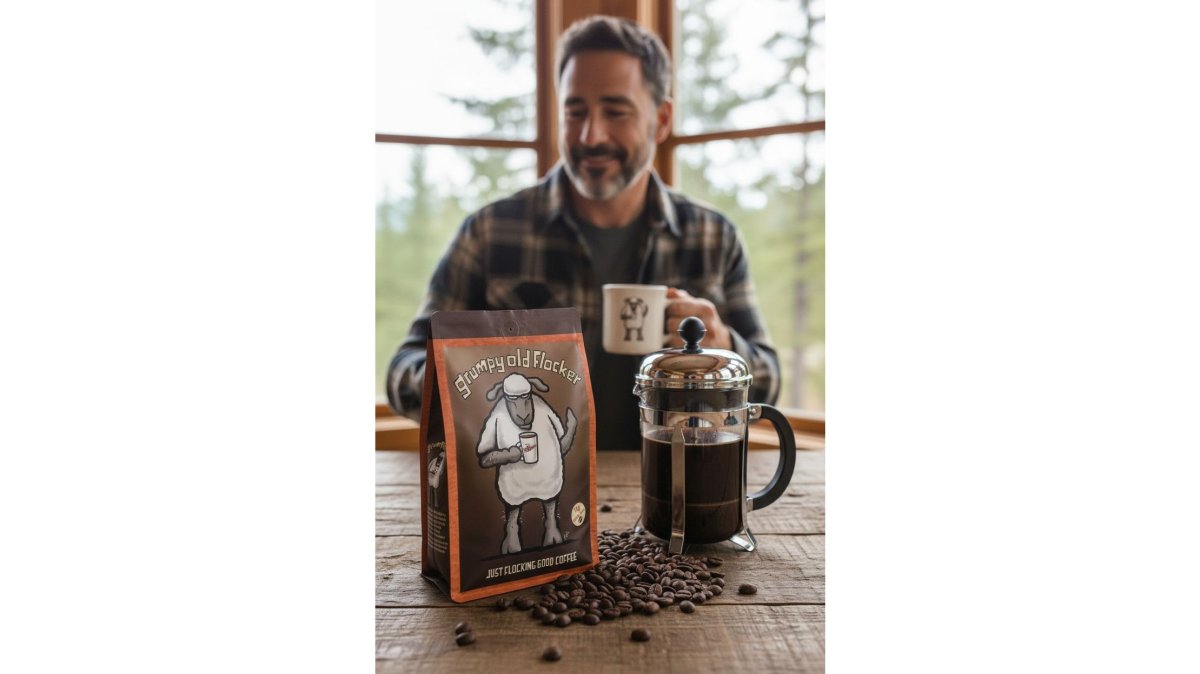
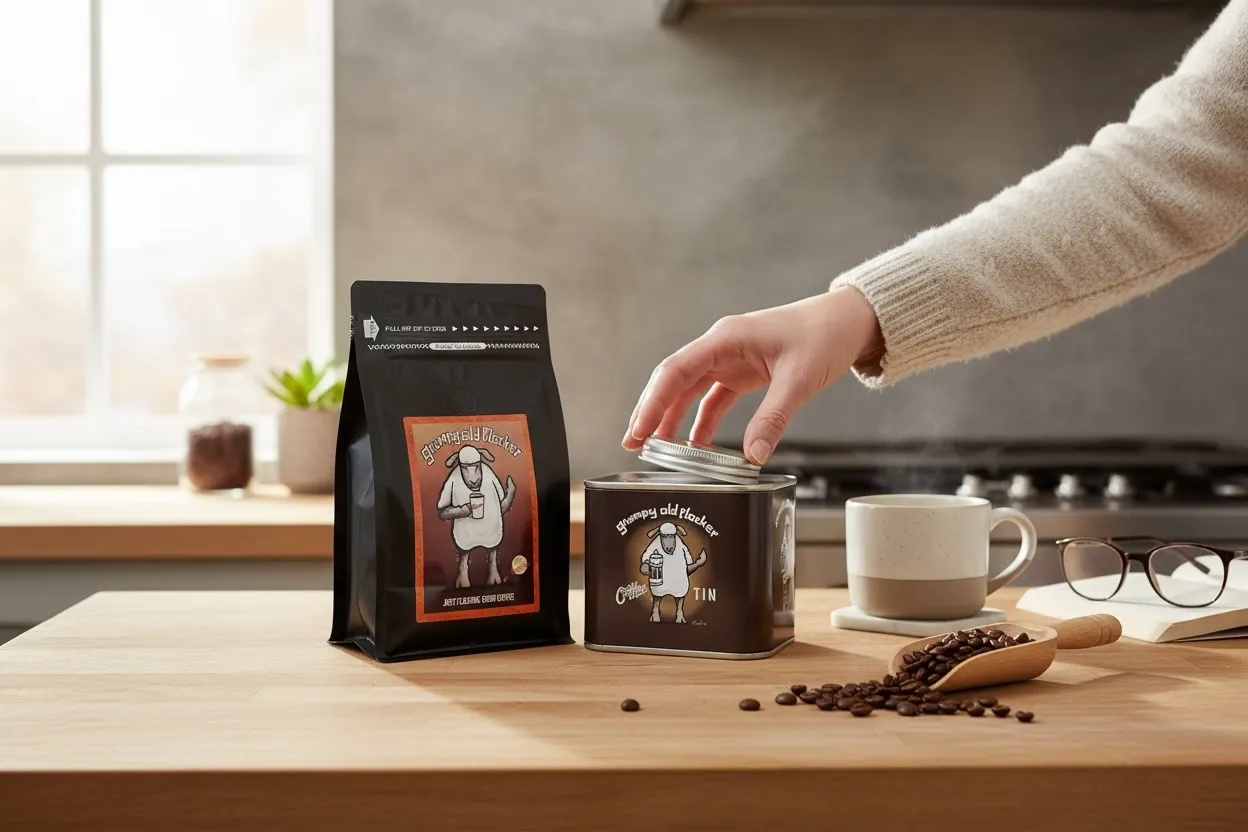
Our top pick is the Flockers Grumpy Old Flocker Coffee Beans, 250g, a freshly roasted small-batch option that suits filter, cafetière, and espresso brewing. We're biased, but the flavour holds up on its own.
Why These Beans Stand Out
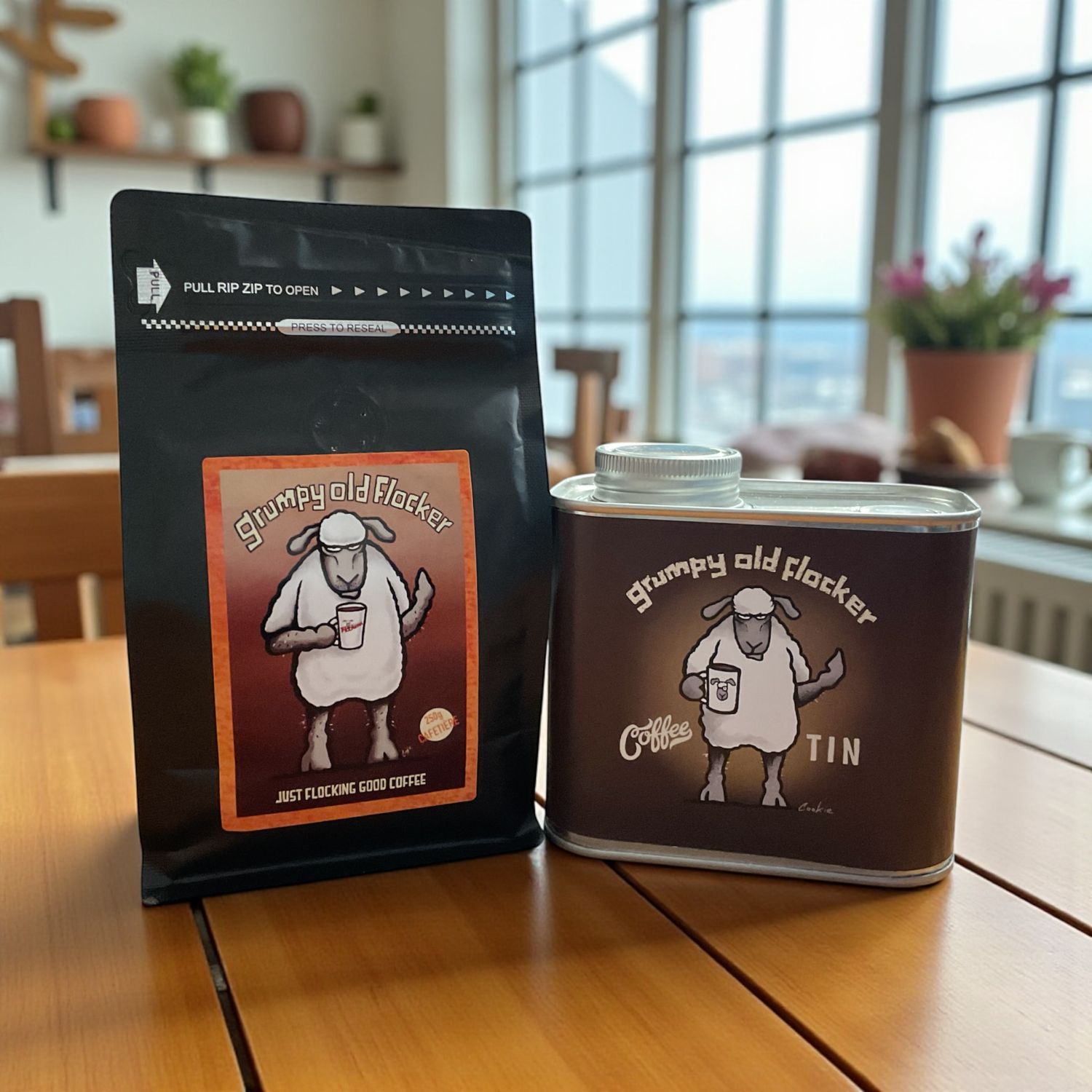
They're roasted in small batches for consistency, and the 250g bag suits home brewers who want freshness without committing to a kilo. Prefer ground? The Grumpy Old Flocker Cafetière Coffee is ready to brew. Pair either with the Flocker Coffee Storage Tins to keep them fresh.
Pros and Cons
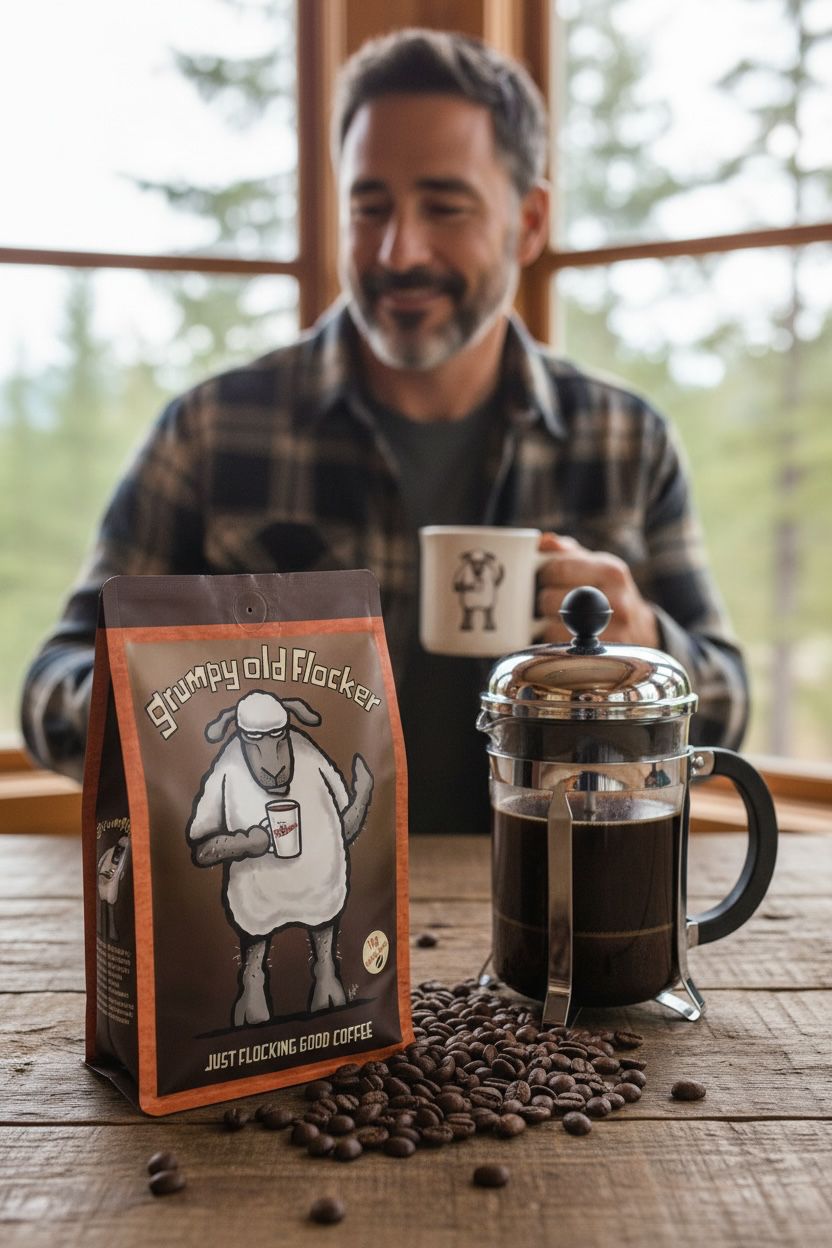
Pros: small-batch roasting, suits multiple brew methods, comes with a sense of humour, 60-day no-hassle returns. Cons: 250g only, so heavy drinkers will reorder often. Allow 3 to 4 days for production.
Troubleshooting Extraction and Water Chemistry
If your coffee tastes sour, you're under-extracting: grind finer or brew longer. If it tastes bitter or hollow, you're over-extracting: grind coarser or shorten the brew. Water matters too, and it's the angle most guides skip.
Aim for water with moderate mineral content; very soft water makes flat coffee, and very hard water scales your kettle and muddies flavour. A simple filter jug often fixes both. For guidance on water quality, see the Water UK standards for drinking water.
For roasting and freshness standards, the Specialty Coffee Association's cupping protocols set the benchmark most speciality roasters work to. And for food storage safety, the Food Standards Agency's guidance on food storage is worth a read.
Frequently Asked Questions
What are the best coffee beans for home brewing?
The best premium coffee beans for home brewing are freshly roasted, whole beans that match your brewing method. Look for a clear roast date within the last two to four weeks, and choose a roast profile that suits your taste. For cafetiere brewing, a medium or medium-dark roast works well, while lighter roasts suit filter coffee. Always buy whole beans and grind them just before brewing to preserve aroma and flavour.
What is the difference between single-origin and blended coffee beans?
Single origin coffee beans come from one specific region, farm, or cooperative, offering a distinct flavour profile that reflects the local altitude, varietal, and processing method. Blends combine beans from multiple origins to create a consistent, balanced cup. Single origins highlight unique tasting notes like floral acidity or fruity sweetness, while blends prioritise consistency and body. Neither is better; it depends on whether you want clarity or reliability.
How should I store premium coffee beans to maintain freshness?
Store coffee beans in an airtight container away from light, heat, and moisture. A sealed tin or opaque canister works well. Keep them at room temperature, not in the fridge or freezer, as condensation can damage the beans. Buy in small batches so you use them within a few weeks of the roast date. Grinding just before brewing preserves the most aroma and flavour.
Does roast level affect the flavour profile of home-brewed coffee?
Yes, roast level significantly impacts flavour. Light roasts retain more of the bean's original character, with brighter acidity and fruity or floral notes. Medium roasts balance acidity and sweetness, offering caramel and nutty flavours. Dark roasts develop deeper, smokier, and bittersweet notes with lower acidity. Your brewing method also matters: darker roasts suit espresso and cafetiere, while lighter roasts shine in filter or pour-over.
What is the 15-15-15 rule for coffee?
The 15-15-15 rule is a simple guideline for brewing consistency: use a 15:1 water-to-coffee ratio (15 grams of water for every 1 gram of coffee), aim for a 15-minute window between grinding and brewing, and ensure your water is heated to around 15 degrees below boiling (about 85-93°C). This helps control extraction and produces a balanced cup. Adjust the ratio to taste, but start here.
Choosing premium coffee beans for home brewing comes down to freshness, grind, and a roast that fits your setup. If you'd rather skip the guesswork, Baaaad Flockers roasts small batches, offers 60-day no-hassle returns, and pairs our beans with storage tins and mugs that make mornings a bit funnier. Get started with Baaaad Flockers and taste the difference a proper cup makes.