 ultimate-guide
How to Buy Clothing Online Safely: A 2026 Guide
Table of Contents
- Why Safe Online Clothes Shopping Starts With the Retailer
- How to Spot a Fake Online Clothing Store
- Secure Payment Methods for Online Shopping
- Consumer Rights Online Shopping UK: What You're Entitled To
- Sizing, Fit, and Virtual Try-On: Getting It Right First Time
- Safe Package Delivery and Spotting Counterfeit Goods
- Frequently Asked Questions
Last Updated: September 11, 2026
Why Safe Online Clothes Shopping Starts With the Retailer
When you buy clothing online safely, it begins with the retailer, not the payment page. If the shop itself is dodgy, no amount of caution at checkout will save you. Getting this right is the single biggest factor in how to buy clothing online safely, and it's where most guides skip straight past the hard bit.
Think of it this way: you wouldn't hand your card details to a stranger in a car park. A website deserves the same suspicion until it earns your trust. The difference between a legitimate retailer and a scam is usually obvious once you know where to look.
A legitimate retailer is a registered business that publishes verifiable contact details, a clear returns policy, and a secure checkout. Scam sites mimic all three, badly, and hope you won't check. Here's the uncomfortable truth most shopping guides won't tell you: the flashiest website is often the least trustworthy. Real shops don't need to shout.
National Cyber Security Centre shopping safely online guidance
How to Spot a Fake Online Clothing Store
Spotting a fake store comes down to three checks: contact details, reviews, and the small print nobody reads. Run all three before you spend a penny.
Check the Contact Details and Company Information
A real shop tells you who it is. Look for a physical address, a phone number, and a company registration number. Scam sites hide behind a contact form and a Gmail address, because a real address can be traced. If the "About" page is three vague sentences and a stock photo, walk away.
Read the Reviews (and Spot the Fake Ones)
Genuine reviews mention specific things: a delivery delay, a sizing quirk, a refund handled well. Fake reviews are gushing, generic, and posted in suspicious clusters. Check whether the same phrases repeat across different names. Real people don't all describe a jumper as "absolutely amazing quality, fast shipping, will buy again."
Secure Payment Methods for Online Shopping
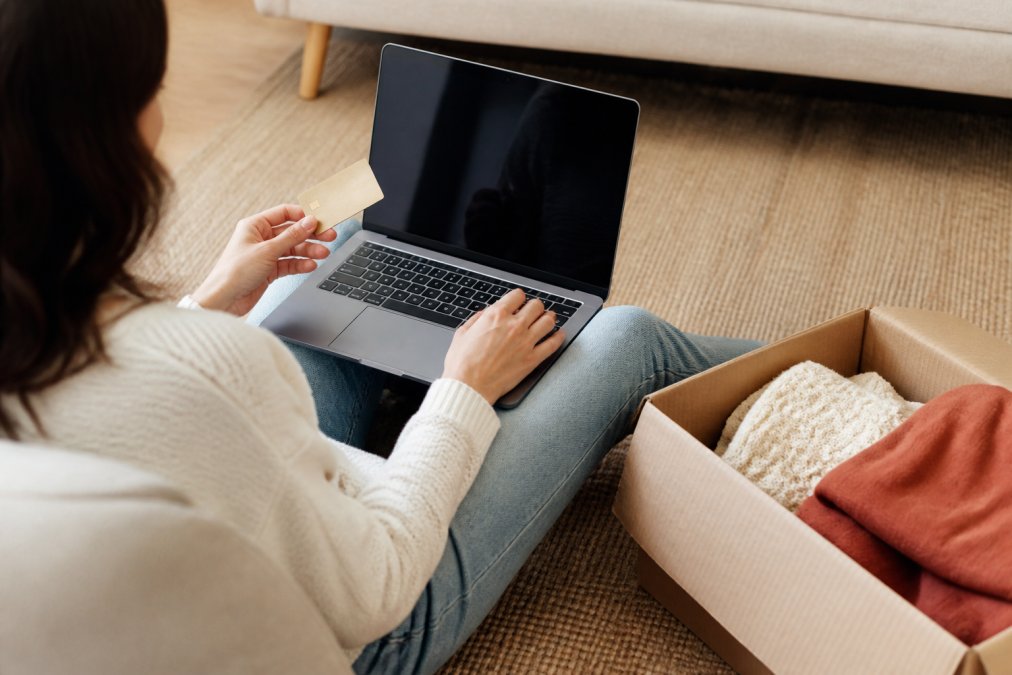
Secure payment methods for online shopping are those that let you dispute a charge after the fact. The best is a credit card, followed by a digital wallet like PayPal. Debit cards and bank transfers leave you with far less protection if things go wrong.
A secure payment gateway is the system that encrypts your card details between your browser and the retailer's bank. You can't see it working, but you can see its fingerprints: a padlock in the address bar and an address beginning with https://.
Why Credit Cards Beat Debit Cards for Online Clothes Shopping
Credit cards give you a legal right to claim your money back from the card issuer when goods don't arrive or aren't as described. That protection is the reason to use one for any unfamiliar shop, even if you pay it off immediately. Debit cards pull straight from your bank account, and getting that money returned is far harder.
| Payment Method | Protection Level | Best For | Watch Out For |
|---|---|---|---|
| Credit card | Strongest | Unfamiliar shops | Interest if unpaid |
| Digital wallet | Strong | Everyday purchases | Account takeover risk |
| Debit card | Weak | Trusted retailers only | Slow dispute process |
| Bank transfer | None | Never for online shops | No way to reclaim funds |
Consumer Rights Online Shopping UK: What You're Entitled To
Your consumer rights online shopping UK protections are stronger than most shoppers realise. Under the Consumer Contracts Regulations, you generally have 14 days from delivery to cancel an online order and return it for a refund, for any reason (legislation.gov.uk). The retailer must refund you within 14 days of receiving the goods back.
That cooling-off period exists because you can't inspect clothes before buying them online. Use it. If something doesn't fit, don't talk yourself into keeping it.
There are sensible exceptions: personalised items, and anything made to your specification, can't be returned simply because you changed your mind. That matters for custom or printed clothing, so check before you order.
Citizens Advice on returning goods bought online
Sizing, Fit, and Virtual Try-On: Getting It Right First Time
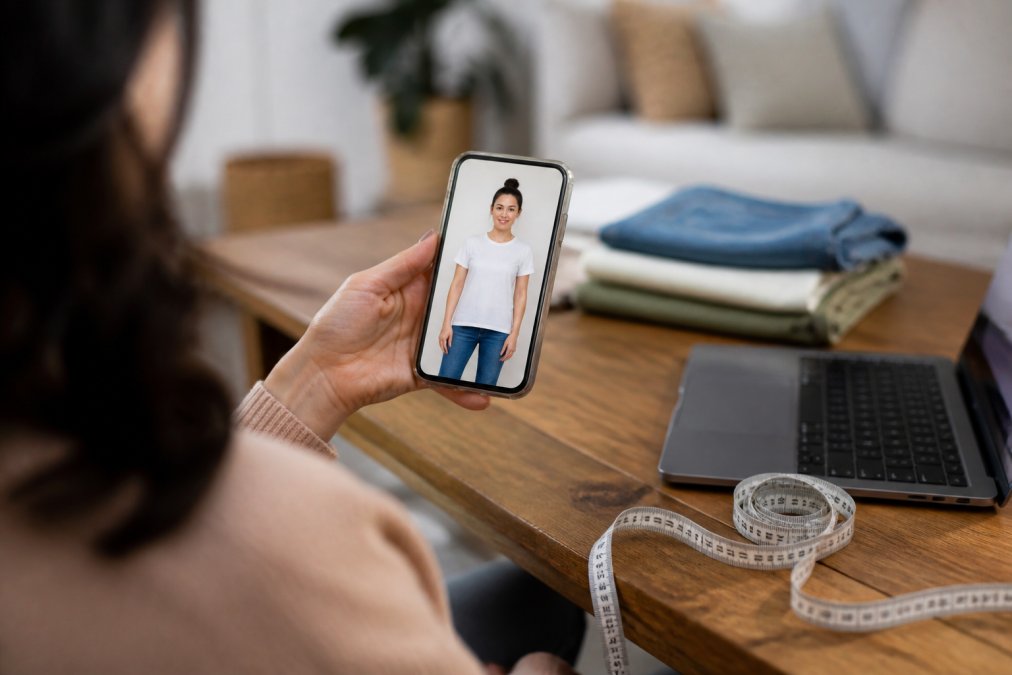
Sizing is where online clothes shopping goes wrong most often, and it's the one thing you can control. Measure yourself, don't guess. Grab a tape measure, check your chest, waist, and length against the shop's own size charts, and ignore the label you wear elsewhere. Sizes are not standardised between brands, a medium in one label can be a large in another, and vanity sizing has widened that gap over the past decade.
How Virtual Try-On Actually Works
Virtual try-on tools fall into two broad types, and knowing which you're using changes how much you should trust it.
- Augmented reality (AR) overlays use your phone camera to drape a 3D garment model over your body in real time. They're good for colour, silhouette, and rough proportion, but they struggle with fabric drape, stretch, and how a garment sits when you move.
- Body-scan sizing tools ask for your height, weight, and a few measurements, then match you to a size using the retailer's own garment data. These tend to be more accurate for fit than AR, because they work from numbers rather than pixels.
A common pattern is that AR try-on flatters the garment, it shows the ideal drape, not the real one. Treat it as a colour and style check, not a fit guarantee. The reliable move is still the tape measure and an honest look at the size chart.
Reading a Size Chart Properly
Most shoppers glance at the size chart and pick the number closest to their usual label. That's the mistake. Do this instead:
- Measure your body, not a garment you own. Chest at the fullest point, waist at the narrowest, hips at the widest. Keep the tape snug but not tight.
- Compare your measurements to the chart's body measurements, not the garment measurements. Some retailers list both, and they are not the same thing.
- Check the fit note. If the chart says "relaxed fit" or "slim fit," that tells you how much ease is built in. A relaxed-fit medium is cut larger than a slim-fit medium.
- Look for a fabric shrinkage note. Cotton and cotton-blend garments can shrink after a hot wash. If the shop flags pre-shrunk fabric, that's a useful signal.
When in doubt, size up on anything you want roomy, and check whether the fabric is pre-shrunk. If a shop offers no size chart at all, that's a warning sign, legitimate clothing retailers publish one because returns cost them money too.
Why Fit Accuracy Is a Safety Issue
Getting the size right the first time isn't just about convenience. Every return means handing your parcel back to a courier, waiting for a refund, and sometimes paying return postage. Fewer returns means fewer chances for a parcel to go missing, fewer refund disputes, and less of your personal data circulating through reverse-logistics systems. Fit accuracy is the quietest form of online shopping safety there is.
Safe Package Delivery and Spotting Counterfeit Goods
Two things trip people up at the finish line: safe package delivery and fakes. Both deserve more than a passing mention, because both are where money quietly disappears.
Safe Package Delivery
Porch theft is common, and unsigned-for deliveries are hard to claim back. A few habits close most of the gap:
- Choose a tracked service. Tracking gives you a delivery window and a record if the parcel goes missing. Untracked deliveries leave you arguing from memory.
- Redirect to a secure locker or a trusted neighbour. Most UK couriers offer a locker network or a safe-place option. Use it if you're likely to be out.
- Avoid 'safe place' instructions that are visible from the street. A note saying "leave behind the bin" is an invitation. If you must leave instructions, pick somewhere out of sight.
- Photograph the parcel on arrival if it looks tampered with, before opening it. This matters if you need to raise a claim.
- Report missing parcels promptly. Courier claim windows are short, and retailers often need you to flag non-delivery within a set number of days.
If a parcel never arrives, your first move is to contact the retailer, not the courier. Your contract is with the shop, and under consumer law the retailer is responsible for getting the goods to you.
Spotting Counterfeit Goods
Counterfeit products are the other trap, and they're getting harder to spot. Fake branded clothing often shows up through a price that's too good, stitching that's loose or crooked, and packaging that feels cheap. If a "designer" item costs a fraction of its normal price, it isn't a bargain, it's a fake.
Look closer at these cues:
- Stitching and seams. Genuine garments have even, tight stitching with no loose threads. Fakes often have wavy seams, skipped stitches, or glue residue where stitching should be.
- Labels and tags. Check the font, spacing, and spelling on the brand label. Counterfeiters frequently get the small print wrong, a misplaced accent, a wrong logo proportion, or a care label in the wrong language.
- Hardware. Zips, buttons, and rivets on genuine branded clothing are usually branded or stamped. Cheap, unbranded hardware on a premium-priced item is a tell.
- Packaging. Authentic items usually arrive with branded packaging, dust bags, or tags. A designer coat arriving in a plain poly bag is a warning.
- Print quality. On printed garments, check whether the print is sharp and correctly aligned. Blurry edges, colour bleed, or a print that feels plasticky and thick are common on fakes.
Genuine brand reputation is built on consistency, and counterfeits rarely match it up close. If you're unsure, buy from the brand's own site or an authorised stockist rather than a marketplace seller with no verifiable trading history.
Frequently Asked Questions
How can I check if an online shop is safe before buying?
Look for an HTTPS padlock, a full postal address, a landline or mobile number, and a company number. Search the brand name plus 'reviews' and 'scam' on a search engine. Check Trustpilot and social media for real customer photos. If the site only offers bank transfer, has no returns policy, or the prices are suspiciously low, walk away. A legitimate retailer will always show clear contact details and a privacy policy.
What are the safest payment methods for online shopping?
Credit cards offer the strongest protection under Section 75 of the Consumer Credit Act 1974 for purchases over £100 and under £30,000. Debit cards and PayPal give you chargeback rights if goods never arrive or arrive damaged. Digital wallets like Apple Pay and Google Pay mask your card details. Avoid bank transfers, cryptocurrency, and gift cards, as these offer almost no comeback if something goes wrong.
What are my consumer rights if an online clothing order goes wrong?
Under the Consumer Rights Act 2015, clothing must be of satisfactory quality, fit for purpose, and as described. You have 30 days to reject faulty items for a full refund. The Consumer Contracts Regulations 2013 give you 14 days to cancel most online orders for any reason, starting the day you receive the goods. The retailer must refund you within 14 days of cancellation.
How can I spot fake reviews on clothing websites?
Fake reviews often appear in bursts with similar wording, five-star ratings only, and no photos. Check whether reviewers have other activity on the platform. Look for reviews mentioning specific details like fabric feel, wash durability, or fit on a particular body type. Cross-reference with independent sites like Trustpilot. If every review is glowing and posted on the same day, treat it as a red flag.
Is it safe to buy clothes using public Wi-Fi?
Public Wi-Fi networks in cafes, hotels, and airports are often unencrypted, which means others on the same network could intercept your data. If you must shop on public Wi-Fi, use a VPN or stick to your mobile data. Better still, save your card details in a password manager and shop from a trusted home network. Always check for the HTTPS padlock before entering any payment details.
How do I know if a clothing brand is legitimate and not a scam?
Legitimate brands have a consistent social media presence, real customer photos, a verifiable business address, and a clear returns policy. Check Companies House for the company registration. Look for a working phone number and email. Read the privacy policy and terms. If the site uses pressure tactics like countdown timers on every item or only accepts bank transfer, those are common scam signals.
What should I do if I think I've been scammed buying clothes online?
Contact your bank or card provider immediately and ask for a chargeback or Section 75 claim. Report the site to Action Fraud, the national reporting centre for fraud and cybercrime. If you paid by PayPal, open a dispute within 180 days. Change any passwords you used on that site, especially if you created an account. Keep screenshots of the listing, payment, and any communication as evidence.
Do I need to worry about counterfeit clothing when shopping online?
Yes. Counterfeit goods often use cheaper materials, faulty zips, and unsafe dyes. Check the stitching, labels, and packaging when your order arrives. Genuine brands use consistent fonts and logos. If the price is far below the usual retail price and the seller is unfamiliar, be cautious. Counterfeits also fund criminal activity, so buying from verified retailers protects both your wallet and the wider supply chain.